



Permanent Restrictions After Spinal Fusion
While spinal fusion can successfully treat conditions like spinal stenosis, spondylolisthesis, and spinal deformities, long-term post-operative success hinges on permanent lifestyle modifications to protect the surrounding vertebrae and prevent adjacent segment disease (ASD). While most patients can expect to return to a fairly mobile lifestyle, permanent restrictions may include a 20 to 40-pound weightlifting limit, no high-impact exercise or contact sports, and avoiding repetitive spinal bending and twisting.
In this extensive guide, we’ll outline detailed activity modifications to give your fusion the best possible chance of lasting a lifetime.
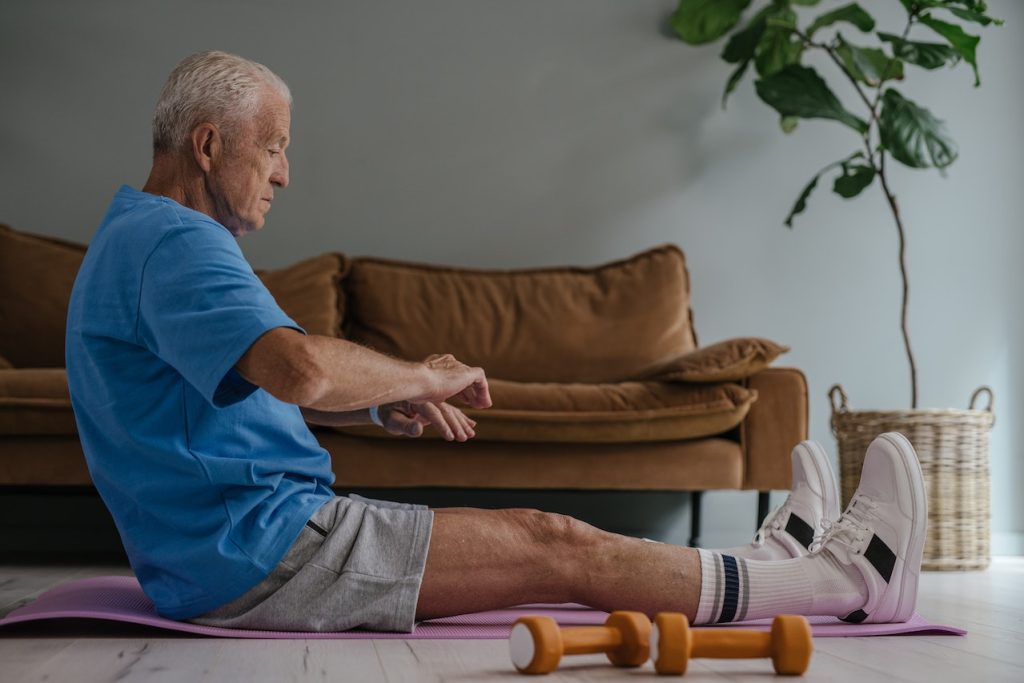
What to Expect After Spinal Fusion: Activity Modification Timeline
The spinal fusion recovery involves bone healing, which requires three months of rest after the surgery to allow the vertebrae to properly fuse.
Here’s a more detailed timeline of the typical spinal fusion recovery process:
- Three to six months after fusion:
- Activity reintroduction: Patients can begin to reintroduce light, low-impact activities into their routines.
- Regaining muscle tone, strength, and flexibility: Patients will likely experience a loss in muscle tone, strength, and flexibility during the resting period. These effects can be offset by gentle exercises to alleviate stiffness and gradually strengthen the muscles that support the spine.
- Six months after fusion:
- No high-impact exercise: Physicians typically still advise against high-impact exercise after six months.
- Other lifestyle activities: If the vertebrae are successfully fused, patients can slowly start to return to more regular physical activity.
- Eight to 12 months after fusion:
- Full recovery: At this point, patients may be able to partake in all of their normal activities.
- Permanent restrictions: Since fusion eliminates all motion at the fused segment, patients don’t regain the ability to bend, twist, or flex at the fusion site.
The Golden Rules of Post-Fusion Life: The “No BLT” Rule
The No-BLT rule is typically enforced in the first 12 weeks after spinal fusion (or longer, as recommended by your provider. It stands for:
- No bending your spine.
- Use the hip hinge technique to safely bend from your hips: With your back straight and a slight bend in your knees, push your buttocks back behind you, feeling your hamstrings engage as you bend. Engage your glutes and core to return to a standing position.

- No lifting more than five to 10 pounds in the first 12 weeks, or more than 20 to 40 pounds permanently.
- No twisting your spine, aiming to keep your shoulders square with your hips.
- Use the log-roll technique to get in and out of bed without spinal twisting:
- 1. Lie flat in bed with a bed rail to your side.
- 2. Engage your core to raise your knees, bringing your feet flat on the bed.
- 3. Reach for the bed rail, clasping it with the closest hand.
- 4. Use that hand as leverage, engage your core, and roll your body in one movement onto your side, now clasping the rail with both hands.
- 5. Slowly drop your feet to the floor from the edge of the bed.
- 6. As your feet start to fall toward the floor, use the bed rail to press up to sitting, keeping your shoulders over your hips.
- Use the log-roll technique to get in and out of bed without spinal twisting:

Permanent Physical Activity Restrictions by Segment
Lumbar fusion restrictions revolve around lifting, sitting, and walking, while cervical fusion restrictions focus on overhead reaching and deep neck rotations.
Lumbar Fusion
- No heavy lifting: Don’t lift more than 20 to 40 pounds, and lift from your legs by bending your knees, engaging your core, and keeping your spine straight.
- Limit prolonged sitting: Aim to take breaks from sitting every 20 to 30 minutes.
- Assisted walking: You may need assistive devices, like a walker or cane, as your spine heals. Aim to gradually increase your walking duration as the spine heals.
Cervical Fusion
- Limited overhead reaching: Avoid reaching for high shelves or performing other overhead activities (like throwing a ball or painting a wall).
- No extreme neck rotations: Avoid twisting or craning your neck. Note that you won’t be able to drive with a rigid neck brace, but once the spine has healed, you’ll likely be able to return to driving and perform the required head turning.
Sports and Recreation: What’s Safe and What’s Not?
| Sports & Recreational Activities After Spinal Fusion: Safe or Not? | |
| Safe | Avoid or Modify |
| SwimmingWalkingLow-intensity cyclingEllipticalWater aerobicsResistance band workouts | Football (and other contact sports)PowerliftingRunningYoga poses involving deep spinal twistsGolfGymnastics |
Professional Life: Navigating the Workplace
Returning to work after spinal fusion can take two to six weeks for sedentary jobs and up to three months for more physically demanding careers. If you have a job that requires heavy lifting or repetitive spinal bending or twisting, you may need to consider a career shift after spinal fusion.
Tips for Sedentary Jobs
- Invest in an ergonomic desk chair with a head cushion and robust lumbar support.
- Position your screen at eye level.
- Take breaks from sitting approximately every 30 minutes (consider a standing desk).

Tips for Active Jobs
- Avoid bending, lifting, and twisting.
- Gradually increase your activity levels.
- Work with a physical therapist to learn the proper posture for work-related movements.
Can I Travel After Spinal Fusion? Considerations and Tips
While traveling after spinal fusion, keep these tips in mind:
- Don’t hop on a flight without getting cleared by your doctor first. Many patients can take short flights just a few weeks after spine surgery, but for flights longer than two to three hours, it’s usually best to wait at least six weeks (this also goes for car and train journeys).
- Don’t get behind the wheel without the green light from your doctor. Many patients can return to driving just two weeks after spinal surgery, for short trips.
- Bring a lumbar support cushion to place behind your back for any trip, and try to maintain proper sitting posture throughout the journey.
- Stand up, gently stretch, and walk up and down the aisle frequently to alleviate impact on the spine.
- Wear comfortable clothing and compression stockings, especially for flights.
Lifestyle Adjustments to Support Long-Term Post-Fusion Success
General lifestyle considerations to implement after spinal fusion include:
- Eat a balanced, nutrient-dense diet, with plentiful anti-inflammatory foods.
- Limit alcohol consumption and refrain from smoking.
- Stay hydrated throughout the day (primarily with water, not beverages that are high in sugar).
- Consider using a cane or walker for extra support, especially in the early stages of recovery.
Why Restrictions Matter: Preventing Adjacent Segment Disease (ASD)
Post-fusion restrictions help prevent adjacent segment disease (ASD), one of the most common causes of fusion failure and reoperation. It occurs when the spinal levels neighboring the fused vertebrae take on additional stress and movement to accommodate the fusion.
Symptomatic ASD occurs in up to 24% of lumbar fusion cases, according to a Scientific Reports study. Possible symptoms include:
- New or worsening back pain
- Radiating pain
- Tingling, numbness, or weakness in the extremities
- Stiffness or lost mobility
Pseudoarthrosis, Another Possible Fusion Complication
Pseudoarthrosis, or failed fusion, occurs when the bone graft fails to fuse the vertebrae after spinal fusion and may cause recurring back pain and neurological symptoms. Pseudoarthrosis rates range from 5 to 15%, according to a BMC Musculoskeletal Disorders study.
Is Spinal Fusion Necessary? How to Avoid Permanent Restrictions
Spinal fusion is necessary for people dealing with severe spinal weakness, instability, or curvatures who aren’t candidates for alternative treatments.
Severe Spinal Weakness and Instability
As spinal fusion permanently fuses the affected vertebrae, it’s an effective way to address severe spinal weakness and instability, which may result from spinal infections, tumors, or decompression surgery.
- Spinal infections can trigger spinal instability by weakening and damaging various spinal structures, including the discs and vertebrae. As the spinal discs become infected and inflamed, they start to break down. Additionally, if the infection spreads to the vertebrae, it can lead to fractures.
- Spinal tumors can also result in severe spinal instability. If the tumor develops on the vertebra (known as a vertebral tumor), it can gradually weaken the spinal bones. These weakened bones can fracture or fall out of alignment, making it difficult for the spine to support the body.
- Severe spinal curvatures from scoliosis or kyphosis may require spinal fusion to restore spinal alignment. Fusion may also keep these curvatures from worsening over time.
- Scoliosis is a sideways spinal curvature that most often affects kids and teens. The curve often creates a ‘C’ or ‘S’ curve. An estimated six to nine million people in the U.S. have scoliosis, and while most cases are mild and can be treated without surgery, severe scoliosis has a high likelihood of progression, making prompt treatment essential.
- Kyphosis occurs when the upper back curves forward abnormally. This condition may be caused by various underlying conditions, including degenerative spinal diseases, osteoporotic compression fractures, and spondylolisthesis. Spinal fusion may be necessary for severe cases of kyphosis that cause chronic pain and interfere with the patient’s daily activities.
Spinal fusion may also be the primary treatment option for patients who undergo spinal decompression surgery and aren’t candidates for non-fusion implants. Fusion prevents instability after spinal decompression procedures.
How To Avoid Spinal Fusion Restrictions: Non-Fusion Alternatives
Considering the restrictions associated with spinal fusion, many patients seek out ways to avoid this procedure. In these cases, patients may either opt for non-surgical treatment options or surgical spinal fusion alternatives.
Non-Surgical Spinal Fusion Alternatives
Patients suffering from chronic back pain and neurological symptoms from conditions like spinal stenosis and herniated disc often benefit from conservative treatment. Conservative treatments that may help patients avoid spinal fusion include:
- Physical therapy
- Lifestyle adjustments, such as losing weight, starting a low-impact exercise regimen, adopting an anti-inflammatory diet, and refraining from high-impact activities
- Chiropractic care
- Acupuncture and massage therapy
These therapies can help reduce the impact on the spine, improve muscular support for the spine, reduce inflammation, and promote healing. Most physicians recommend a combination of non-surgical treatments for chronic back pain.
Surgical Spinal Fusion Alternatives
When spinal pain becomes debilitating and/or severely interferes with the patient’s daily activities, surgery may be unavoidable. But, with modern medical advancements, patients now have non-fusion surgical treatment options to consider.
Dynamic stabilization systems are among the most prominent of these options. The goal of this treatment is to stabilize the spine without inhibiting its motion, usually with a specially designed device. This device is generally placed in the affected segment after surgical spinal decompression.

The FDA-approved TOPS System is one example of a dynamic stabilization system that’s used as an alternative to lumbar spinal fusion. It replaces the tissues removed in spinal decompression to prevent spinal instability while restoring the natural motion of the spine. It also earned a superior-to-fusion claim from the FDA, confirming its merit as a motion-preserving fusion alternative.
David danced at his son’s wedding Bonnie explains why TOPS surgery was the right decision for her Wade is back to hiking Scott speaks about going to surgerySay goodbye to spinal problems starting Now!


Regain your mobility with Premia Spine! Contact us now
Patients who are concerned about permanent restrictions after spinal fusion should reach out to a spine specialist to learn more about the fusion alternatives available today.
FAQs
- Does spinal fusion qualify for permanent disability?
- Yes, spinal fusion can qualify for permanent disability benefits, including Social Security Disability (SSD), although you’ll need to submit an Adult Disability Application with extensive supplementary information to prove that you qualify.
- Can I ever go to a chiropractor after spinal fusion?
- Yes, you can typically go to a chiropractor after spinal fusion, although you’ll need to wait for at least six months to a year to ensure the segment fully fuses, receive approval from your surgeon, and inform your chiropractor of the procedure, ensuring they don’t directly manipulate the fused segment.
- How much weight can I permanently lift after L5-S1 fusion?
- Most people can lift up to 20 to 40 pounds after L5-S1 fusion, although permanent limits can vary. Your surgeon can provide a precise range.
- Can I fly on a plane long-term after spinal fusion?
- Yes, you can fly long-term after spinal fusion, just wait at least two months after the procedure before taking longer flights.
- How long does hip pain last after spinal fusion?
- Hip pain is common after spinal fusion and should go away within a few months. If it persists longer than three to six months with home care and physical therapy, talk to your surgeon for further guidance.
- How painful is an L4-L5 fusion?
- L4-L5 fusions are usually quite painful during the first few weeks, and your surgeon will likely prescribe painkillers to help you feel more comfortable. Your pain should gradually subside as the fused segment heals, with proper care and physical therapy.