



Lumbar Laminectomy Surgery to Cure Spinal Stenosis

In translation from Greek, stenosis means narrowing. Chronic compression of nerve structures resulting from narrowing of the spinal canal is a dangerous, slowly progressive disease. And while earlier treatments for complex forms of stenosis included discectomy or decompression, today, minimally invasive options are available.
Stenosis can develop for a long time at the cervical, thoracic, and lumbar levels. The spinal cord is located at the first two levels of the spinal column; respectively, the compression will affect its integrity, potentially causing myelopathy. At the lumbar level, the spinal cord ends at the level 1 to 2 vertebrae, but the nerves are compressed in most cases. Often, hypoxia (oxygen starvation) of the roots is accompanied by pain and subsequent numbness of the lower extremities, as well as muscle weakness.
To understand the treatment of stenosis, you first need to look at its causes and analyze the types of therapy, evaluating how innovative alternatives can provide favorable outcomes to traditional procedures.
Reasons for Stenosis
The human spine is a complex structure made up of many elements. The spinal canal is its central part – the spinal cord passes through it, and any pressure from the side of the bone will negatively impact the function of this vital organ.
Spinal stenosis mostly afflicts people over 60 years old and is typically an acquired disease. It most often manifests itself at the lumbar level. It can be caused by the development of a herniated disc, tumor, trauma, arthrosis of the facet joints, the growth of osteophytes, disc protrusion, and the consequence of spondylolisthesis.
Nevertheless, osteoarthritis is the leading cause of changes in the structure of the spinal canal. It consists of wearing out the cartilage tissue and bone growth around the deformed area. That’s how bone spurs (osteophytes) appear, which exert intense pressure on the canal and narrow it.
By the way, there are cases of congenital (primary) stenosis when the vertebral foramen is underdeveloped. Symptoms begin to appear at a younger age, and compression of the nerve roots can disrupt nerve function and start oxygen starvation of the spinal cord, which leads to pain.
Stenosis Symptoms
Depending on the area of the spine where the compression is located, the following symptoms may appear:
- Stiffness and reduced range of motion
- Numbness and pain in the limbs and back
- Lumbar muscle tension
- Poor sensitivity
- Goosebumps, burning, and abnormal nerve sensations
- Urinary incontinence
- Bowel incontinence
- Sexual dysfunction
If there’s a narrowing in the neck, the symptoms may spread to the arms, shoulders, shoulder blades, and the back of the head. Conversely, stenosis of the lumbar region is localized in the legs and feet.
Please note! Spinal stenosis symptoms can often be reduced by leaning forward, sitting, or stopping and not moving.
Diagnostics
Diagnosing any disease is impossible without clear symptoms and medical history. Guiding questions about the nature of pain, its localization, the effect on the ability to move, and performing specific exercises will help your doctor recognize the symptoms. Further, using spinal radiography and magnetic resonance imaging (MRI) can help establish the degree of spinal canal narrowing and bone and cartilage tissue degradation. Sometimes, in complex cases, multispiral computed tomography (MSCT) is prescribed.
Treatment
Treatment of spinal stenosis can be conservative and operative. Conventional therapy includes treatment with analgesics, anti-inflammatory drugs, and physical therapy. However, such a system is often not effective enough.
Surgical intervention for spinal stenosis can be performed using several approaches:
- Decompression laminectomy
- Installation of interspinous fixation systems
- Installation of stabilizing systems
The decompressive operation involves the resection of structures that compress nerves using a lumbar laminectomy surgery implant. Historically, this type of surgery is considered a traditional approach to treatment. However, it’s already outdated. Many shortcomings are the reason for the lack of effectiveness of the procedure: It involves removing structures that form the supporting column of the spine (Holdsworth). This leads to its instability and, soon, the risk of developing failed back surgery syndrome. In addition, fusion alters the biomechanics of the adjacent segments’ spinal motion, contributing to accelerated degeneration. All of this can lead to the development of complications and recurrent back pain.
A feature of interspinous dynamic fixation systems is the ability to perform both flexion and extension. In this case, the load on the intervertebral joints is reduced, and normal spinal motion is restored.
Stabilizing systems are constantly improving, making it possible to evenly distribute the axial load between the vertebrae. In this case, the recovery time is minimal, and the effect is the best. It’s essential to understand that, unlike a lumbar laminectomy surgery, an implant has the best chance of restoring the entire range of movements and eliminates a huge number of postoperative complications.
What is a Lumbar Laminectomy?
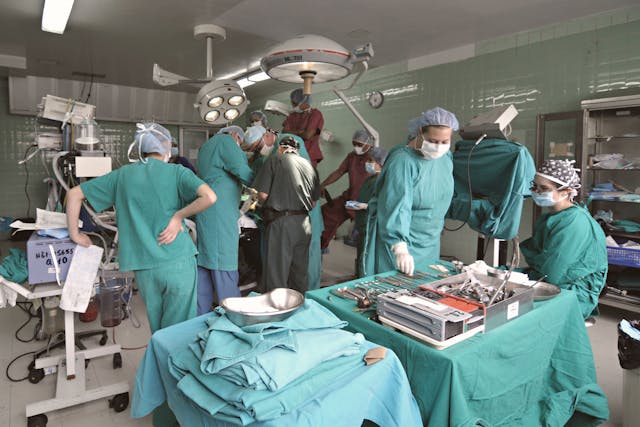
A lumbar laminectomy is a type of spine surgery that involves removing part or all of the lamina (the bony arch covering the back of the spinal canal) to alleviate lumbar nerve compression. Extracting the lamina creates more space in the spinal canal, which may help resolve symptoms of spinal stenosis and other conditions involving impinged lumbar nerves. Its success rate ranges from around 60% to 75%, depending on the study.
Who’s a Candidate for Lumbar Laminectomy?
Candidates for lumbar laminectomy must have a condition involving compressed lumbar nerves, most commonly spinal stenosis, that causes debilitating neurological symptoms like numbness, weakness, and tingling. They must generally have also undergone conservative therapies for at least six months, to no avail.
Lumbar laminectomy candidates must also meet these criteria to undergo any surgical procedure, meaning they’re in good general health with realistic expectations of the procedure’s outcome. Contraindications like active infections, spinal instability, spinal tumors, significant spinal deformities, and spinal trauma may disqualify you from undergoing the surgery.
Types of Laminectomy Procedures
The two main types of laminectomy procedures are conventional open laminectomy and minimally invasive laminectomy.
- Conventional laminectomy involves a posterior approach, meaning the surgeon accesses the spine through the back. This requires cutting through the large back muscles, which can prolong healing and exacerbate postoperative discomfort.
- Minimally invasive laminectomy uses various techniques to remove part of the lamina with a smaller incision and less tissue disruption. This approach reduces the amount of bone and ligament tissue removed in the procedure, leading to shorter hospital stays and lower reoperation and complication rates than open laminectomy, according to a 2024 study.
There are various surgical approaches that fall under these larger subcategories, including two types of minimally invasive laminectomy: Tubular and endoscopic.
- Tubular laminectomy uses a specialized tool called a tubular retractor to allow the surgeon to access the spine through a small incision. It creates a small passageway through which the surgeon can remove the lamina, typically using computer navigation technology to visualize the inside of the body.
- Endoscopic laminectomy uses an endoscope, a small tube with a light and a mini camera on the end. This tool allows the surgeon to visualize the spine through a very small incision. According to a study published in the Global Spine Journal, endoscopic laminectomy reduces adverse events and the length of hospital stays compared to open laminectomy.
Risks and Complications of Laminectomy
Laminectomy comes with certain risks and complications. Some of these risks are associated with any type of surgery, and some are specific to spinal surgery.
Risks and complications associated with all surgical procedures include:
- Shock from reduced blood pressure and blood loss
- Hemorrhage, or rapid blood loss, which can induce shock
- Infection at the surgical site, which can spread to other tissue, organs, or the bloodstream
- Deep vein thrombosis, which occurs when a blood clot develops in one or multiple deep veins, presents the risk of heart failure
- Reactions and complications associated with anesthesia
In all types of spine surgery, the surgeon works around the delicate spinal cord and nerves. This creates the risk of neurological complications that, though rare, can have lasting consequences. These include:
- Spinal cord injuries, which can cause paralysis in certain areas of the body
- Sexual dysfunction from damage to the nerves that supply the pelvic region
- Dural tear, which is a tear in the thin layer of protective tissue surrounding the spinal cord, called the dura mater
Your surgeon will inform you of all the involved risks and complications in advance of the procedure. Proper before and aftercare can help mitigate these risks.
Regain your mobility with Premia Spine! Contact us now
Laminectomy vs. TOPS™ Implant
Traditional laminectomy with fusion and the TOPS™ implant are distinct approaches for spinal stenosis. Laminectomy with fusion eliminates all motion at the fused level to stabilize the spine, while the TOPS™ implant establishes a controlled range of motion at the affected level. This fundamental difference in approach can drastically change outcomes, and as a result, the TOPS™ System has earned a superior-to-fusion claim from the FDA.

Here’s a brief overview of each method:
- Laminectomy with fusion involves placing bone graft material between the affected vertebrae after removing the lamina. The surgeon may also place hardware, like rods and screws, for added stabilization. In the year following the procedure, the graft prompts new bone tissue formation that permanently joins the vertebra, preventing instability.
- Unfortunately, by eliminating motion at the affected segment, spinal fusion also poses new risks, including failed fusion (pseudoarthrosis), lost mobility, and adjacent segment degeneration.
- The TOPS™ System is a mechanical implant device that replaces the tissues removed during spinal decompression surgery. It allows the spine to move in all directions within a controlled range, effectively preventing instability without restricting the patient’s mobility. TOPS™ is also placed during a minimally invasive procedure, which speeds up healing times and prevents postoperative pain.
| Laminectomy with Fusion | TOPS™ Implant | |
| Immediate Pain Relief? | No | Yes |
| Clinical Success Rate (According to the TOPS™ System U.S. Clinical Study) | 24% overall clinical success | 77% overall clinical success |
| Full Recovery Timeline | 6 months to 1 year | 3 to 6 months |
| Post-Operative Mobility at Affected Spinal Level | None | Flexion, extension, lateral bending, axial rotation |
David danced at his son's wedding Bonnie explains why TOPS surgery was the right decision for her Wade is back to hiking Scott speaks about going to surgeryRegain your mobility with Premia Spine!



Laminectomy Recovery Timeline
The laminectomy recovery timeline can vary significantly based on the approach. While it may take up to a year to fully recover from open laminectomy with fusion, patients who undergo minimally invasive, non-fusion laminectomy may recover in as little as three months.
Usually, after surgery, severe pain can last for a month. In the case of fusion, the pain can last three to six months! But not in the case of the TOPS™ implant. The fact is that after two weeks, you’ll be able to stop the course of painkillers (read more about this here), as the operation is considered minimally invasive.
Other key milestones in the laminectomy recovery timeline include:
- Hospital stay: For both spinal fusion and the TOPS™ System, the typical hospital stay is three days.
- Return to light housework: It may take four to six weeks to return to light tasks around the house after spinal fusion; after minimally invasive laminectomy, it may take just two to four weeks.
- Return to work: This milestone depends greatly on your job. Here are some general guidelines:
- Many people return to sedentary jobs two to six weeks post-op.
- Many people return to moderately active jobs around six to eight weeks after spinal fusion, or four to six weeks for minimally invasive laminectomy.
- You may need to wait three to six months to return to physically demanding jobs after laminectomy, or consider a career modification (particularly after spinal fusion).
To quickly and effectively undergo rehabilitation, both for athletes and older people, it’s essential not to stress the segments. Excess weight lifting (up to eight pounds), twisting, bending, and high-impact exercise can lead to this.
It’s crucial to maintain a stable activity level that gradually increases as you recover (with your surgeon’s clearance). Aim to take short walks, do household chores, and start driving to recover. Within four to six weeks, most patients can return to school, work, or play sports.
Conclusions
Stenosis is a pathological narrowing of the spinal canal and compression of the nerve roots. It can lead to constant pain in the back, as well as numbness, weakness, and tingling in the extremities. Laminectomy is a traditional method of treating stenosis, but today the technique is considered outdated. Several complications after surgery can provoke the occurrence of spondylolisthesis, fractures, scoliosis, and other spinal disorders. Many physicians choose to use other treatment techniques, prioritizing access to a relatively wide range of movements (in the case of complete recovery).
TOPS™ implants have become an alternative to standard surgical stabilization systems and are a breakthrough in medicine. It’s a minimally invasive procedure, presenting a lower risk compared with other surgical approaches, and most importantly, stabilizes the spine without mobility restrictions. The recovery in this case also occurs relatively quickly, making it possible for the TOPS™ system to become a favorite option among patients.
Patient FAQs
How successful is laminectomy for spinal stenosis?
Laminectomy success rates for spinal stenosis are generally high, though they vary based on the procedure. Traditional laminectomy with fusion has a reported success rate of 24% to 64%, while the TOPS™ System showed a success rate of 77% in its clinical study.
Can spinal stenosis come back after a laminectomy?
Yes, spinal stenosis can come back after a laminectomy. This is known as recurrent spinal stenosis, and it may result from:
- Bone overgrowth
- Spinal degeneration, such as the development of osteoarthritis and disc herniation
- Adjacent segment disease, a possible spinal fusion complication that occurs when the vertebrae surrounding the fused level degenerate at an accelerated rate
Following all of your surgeon’s aftercare instructions and leading a healthy lifestyle after spinal fusion can help reduce the risk of recurrent spinal stenosis.
What is the most successful surgery for spinal stenosis?
Minimally invasive, non-fusion procedures like the TOPS™ System are the most successful surgeries for spinal stenosis, as they involve less tissue disruption and don’t restrict spinal motion. This prevents surgical risks and complications while allowing patients to return to an active lifestyle after surgery.
What is the recovery time for lumbar spinal stenosis surgery?
The recovery time for lumbar spinal stenosis surgery is typically three to six months for minimally invasive procedures and six to 12 months for spinal fusion.