



Back Braces and Support Belts for Lower Back Pain
When lower back pain doesn’t budge despite rest and home remedies, a back brace may provide the support you need to heal. By physically taking impact off the spine, these devices can help your back recover without invasive procedures or medications. They can also help you bounce back from back surgery, preventing you from overexerting the spine as the tissue regenerates.
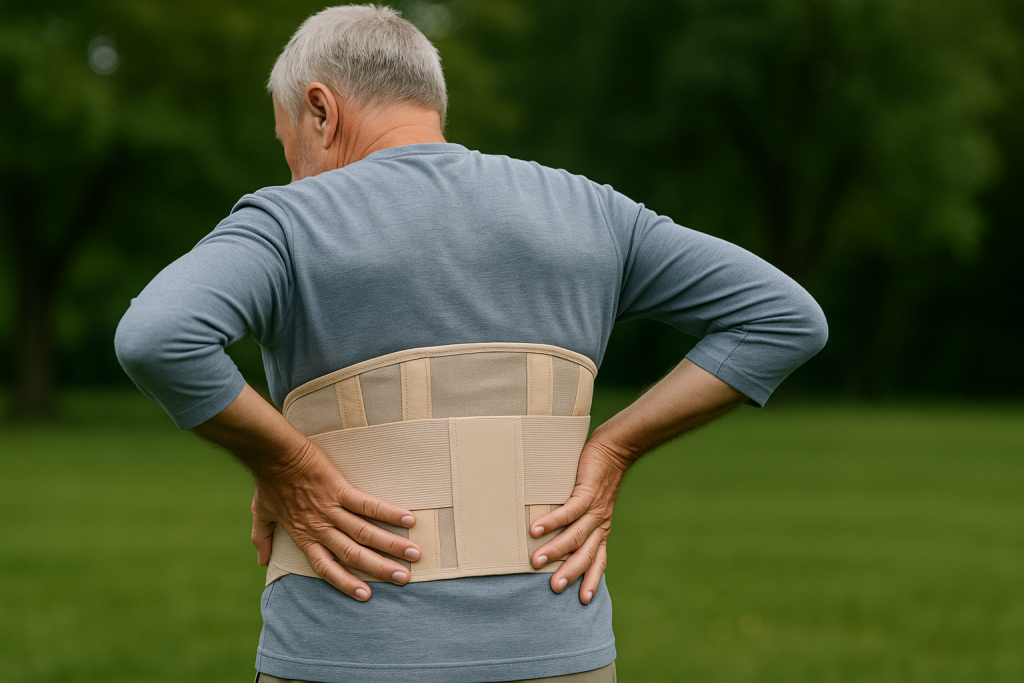
Read on for a deep dive into back braces and support belts for lower back pain, including key benefits, types, and alternatives to consider when braces aren’t enough to provide pain relief.
Making an Informed Decision About Back Support Options
If you’re interested in the back support options to manage lower back pain, start by talking to your doctor. With professional medical guidance, you can better understand your needs and whether back support is a promising treatment option.
Diagnosing your condition is the first step to determining whether back braces or support belts are right for you. Not all types of back pain will meaningfully benefit from back support, and it’s crucial to identify the underlying cause of your pain. For example, while back bracing can prevent further damage and promote healing for certain spinal conditions, like spondylolisthesis, bracing isn’t always helpful for back pain caused by muscle tension (bracing prevents mobility, which can exacerbate stiff, tense muscles).
Your doctor or spine specialist can evaluate all the factors contributing to your pain and, if appropriate, recommend an appropriate back support option.
Types of Back Braces for Lower Back Pain and Their Applications
Types of back braces for lower back pain include rigid braces, lumbosacral belts, trochanteric belts, corsets, Williams braces, chair-back braces, hyperextension braces, and Raney flexion jackets.
Rigid Braces
Rigid braces are made of stiff material (usually hard plastic) to significantly restrict the wearer’s spinal movements. Along with the rigid molded material, they include soft fabric straps to keep the brace in place.
Applications: Rigid braces stabilize the spine for patients with spondylolisthesis (a condition involving vertebral slippage and spinal instability) and those recovering from spinal surgery. By restricting its motion, the brace prevents further damage to the spine as it heals.
Lumbosacral Belts
Also known as a lower back support belt, a lumbosacral belt is designed to be wrapped around the lower torso to alleviate pressure from the lumbar spine and sacroiliac joint. It usually consists of a soft material, like cotton, reinforced by pliable splints. It gently compresses and stabilizes the spine, usually with straps or laces to adjust the pressure.
Applications: Lumbosacral belts are used to reduce lumbar spine and sacroiliac joint pain, support post-back surgery recovery, and improve posture (especially for people with sedentary jobs). Some athletes use them to support the spine during high-impact activities, like heavy weightlifting.
Trochanteric Belts
Trochanteric belts (AKA sacroiliac belts) fit around the area of the pelvis between the iliac crest (the curved area of the upper hip) and the trochanter (a bony process close to where the femur meets the hip joint). It looks like a normal belt with a front buckle, and it prevents excessive rotation or movement in the lower back joints.
Applications: Trochanteric belts treat sacroiliac joint dysfunction by encouraging optimal pelvic alignment and preventing hypermobility.
Corsets
These aren’t the corsets worn by 16th-century women to achieve an hourglass silhouette: They’re a type of back brace used to stabilize and support the back. Similar to the corsets of yesteryear, they usually lace up (either from the front, back, or side) to adjust the compression.
Applications: Corset back braces help reduce pressure on the lumbar spine from a wide range of conditions, including scoliosis and osteoarthritis. This can help calm pain and muscle spasms. Similar to other types of back braces, corsets may also be used to promote healing after spinal surgery.
Williams Braces
The Williams brace is elastic in the front, allowing you to move forward, but has rigid side uprights to limit side-to-side motion. This brace design also prevents spinal extension (bending backward), which places significant stress on the spine.
Applications: Williams braces are typically recommended for patients with spondylolisthesis and spondylolysis (a vertebral stress fracture).
Chair-Back Braces
Chair-back braces immobilize the lumbar spine, keeping it in a neutral position. More specifically, it limits the lumbar spine’s sideways and rotating motions. Many chair-back brace designs exist, including corset-front designs, rigid options, and padded braces.
Applications: Chair-back braces are mainly used to support and protect the spine while sitting. They may be helpful for people with chronic back pain, spinal stenosis, herniated disc, and related conditions who sit at a desk for several hours during the workday.
Hyperextension Braces
Hyperextension braces restrict spinal bending in the lumbar and thoracic spine, keeping these regions from bending forward. They often have a padded pelvic band that can be adjusted to suit different positions, like sitting and standing.
Applications: Hyperextension braces are often used for spinal compression fractures, degenerative disc disease, and post-fusion healing.
Regain your mobility with Premia Spine! Contact us now
David danced at his son's wedding Bonnie explains why TOPS surgery was the right decision for her Wade is back to hiking Scott speaks about going to surgeryRegain your mobility with Premia Spine!



Raney Flexion Jackets
Raney flexion jackets are a type of rigid back brace that limits the curve in the lumbar spine by restricting it to a neutral tilt. This lowers the impact and pressure on the lumbar spine to promote healing and reduce pain.
Applications: Raney flexion jackets are primarily recommended for pain management in people with spinal compression fractures, although they may benefit other conditions involving lumbar spine instability.
Temporary vs. Long-Term Support Solutions
Back braces and support belts are generally considered a temporary, not a long-term, solution for lower back pain.
While braces offer support for symptom flare-ups, post-operative pain, and damage prevention in high-impact settings, they typically can’t cure chronic lower back pain. Additionally, wearing a back brace for extended periods may lead to muscle weakness and even atrophy, as it prevents movements that preserve muscle strength and mobility.
That said, for some people, long-term bracing can provide valuable pain relief without reliance on painkillers or invasive procedures. Your doctor can work with you to find a design that’s practical for long-term wear in various settings.
Understanding When Back Braces Aren’t Enough
Key signs that back braces may not be enough to manage your lower back pain include:
- Your back pain persists have several weeks of wearing the brace.
- You continue to feel pain in certain positions while wearing the brace.
- You feel reliant on the brace and feel like you can’t manage without it, even after several weeks of wearing it as part of a comprehensive treatment plan.
- You’ve been diagnosed with an advanced or severe spinal condition that requires more aggressive treatment to prevent worsened damage.
TOPS System for Permanent L4-L5 Support
The TOPS System is a dynamic implant device that provides permanent L4-L5 support for lumbar spondylolisthesis and spinal stenosis. It’s a lasting solution to consider when back bracing isn’t enough to resolve your pain.

TOPS is an FDA-approved innovation that replaces the tissues removed during spinal decompression, restoring a controlled range of motion. Unlike spinal fusion, it allows the spine to move in all directions without pain or instability. With these remarkable benefits, it’s no wonder that TOPS earned a superior-to-fusion claim from the FDA.
Talk to a spine specialist in your area to learn more about back bracing and back pain innovations like TOPS to help you regain comfort, stability, and an active lifestyle.