



Worst Sleeping Position for Lower Back Pain
The worst sleeping position for lower back pain is on your stomach because it deepens the curve of the lumbar spine, placing more pressure on the spinal discs, nerves, joints, ligaments, and surrounding muscles. The best alternatives are sleeping on your back with a pillow under your knees, or sleeping on your side with a pillow between your knees. When you consider that you spend approximately one-third of your life sleeping, adopting a spine-friendly position is an essential pillar of back pain prevention.
Read on to learn more about sleeping positions that could harm your lower back, the best alternatives, and mattress and pillow recommendations to support spinal health.

Why Does Sleep Position Affect Lower Back Pain?
Sleep position directly affects lower back pain because it impacts your spine’s alignment throughout the night, either reducing or increasing stress on the spine. Poor sleep can also exacerbate lower back pain by contributing to increased pain sensitivity.
- The reinforcing loop of pain and poor sleep: A 2025 Sleep and Biological Rhythms study confirmed the bidirectional relationship between sleep disturbances and pain. Chronic pain and sleep disturbances create a vicious cycle: chronic pain contributes to reduced sleep quality, while disturbed sleep worsens chronic pain and increases pain sensitivity.
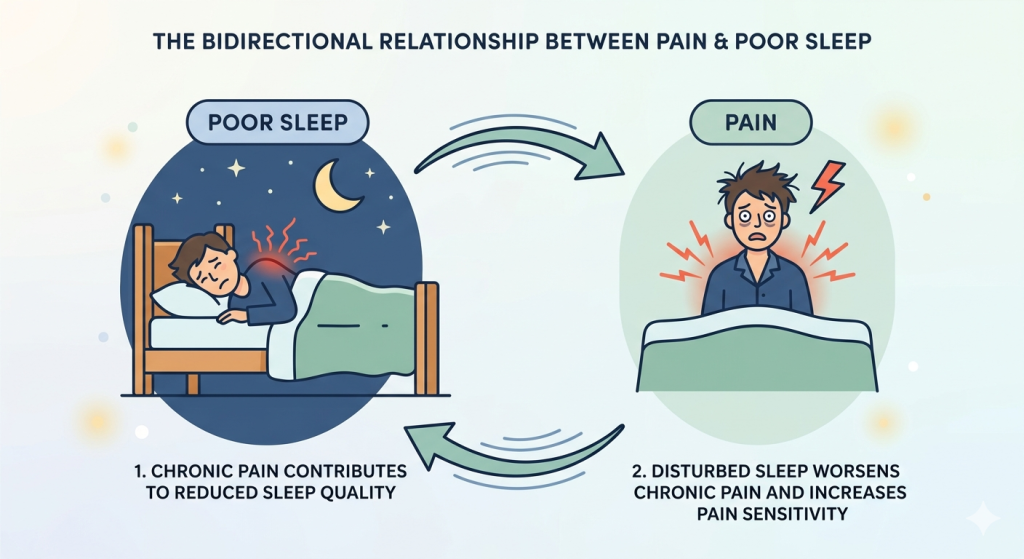
- How many people with chronic back pain have disturbed sleep? In a European Spine Journal study, 58.9% of participants reported that lower back pain disturbed their sleep.
What Is the Worst Sleeping Position for Lower Back Pain?
The worst sleeping position for lower back pain is stomach sleeping. According to the National Spine Health Foundation, it places more stress on your spine than any other sleeping position.
Sleeping on your stomach can harm your lower back by increasing the pressure on the lumbar spine. In this position, your stomach sinks into the mattress, deepening the lumbar spine’s natural curvature. This strains the soft tissues in the area while placing excessive impact on the spinal structures.
How Stomach Sleeping Affects Your Neck
Stomach sleeping isn’t just harmful for your lumbar spine; it can negatively impact your neck, too. To sleep on your stomach, you have to rotate your neck dramatically to one side. This contributes to cervical spine misalignment, muscle tension, and impact on the spinal nerves.
How Stomach Sleeping Affects Spinal Discs
Whether you’ve been diagnosed with a herniated disc or are looking to minimize wear and tear on these essential spinal components, avoiding stomach sleeping is crucial. By deepening the lumbar curve, stomach sleeping significantly increases the stress on the spinal discs as you sleep. Especially if you have a herniated disc, aim to sleep on your back with a pillow under your knees, or on your side with a pillow between your knees.
How to Stomach-Sleep with Lower Back Pain, If You Can’t Stop
If you can’t fall asleep unless you’re on your stomach, you can implement these tips to prevent lower back pain:
- Place a small pillow under your midsection to support the lumbar spine and alleviate excessive pressure.
- Use a flatter pillow under your head to keep your neck and head better aligned with the rest of your spine, or skip the head pillow altogether.
- Use a firmer mattress to better support the spine.
- Make sure your legs are flat, not lifted or twisted, as this can throw off your spine’s alignment.
How to Train Yourself Out of Stomach Sleeping
If you’re a stomach sleeper, committing to switching your sleeping position is a worthwhile investment in your spinal health. Here are a few strategies to try:
- Use pillows strategically.
- For side sleeping: Invest in a body pillow or a large extra pillow to hug in front of you. This provides a similar sensation to stomach sleeping, without the impact.
- For back sleeping: Place a pillow under your knees and one on either side of your body, creating a comfortable barrier to prevent you from rolling onto your stomach.
- Start small: If you wake up during the night on your stomach, gently readjust to your side or back, and don’t get discouraged.
- Use a weighted blanket to prevent movement and deepen relaxation.
- Adopt a soothing bedtime routine with stretching, mindful breathing, and avoiding screen time to minimize stress related to this habit adjustment.
The Best Sleeping Positions for Lower Back Pain
The best way to sleep with lower back pain is on your back with a pillow under your knees or on your side with a pillow between your knees.
Back Sleeping: How to Do It Right
Sleeping on your back is a simple way to keep your spine aligned while you sleep. For people with lower back pain, placing a pillow under the curve in the lumbar spine provides additional support. The pillow will also help relax your back muscles, preventing tension and spasms.
The ideal mattress firmness for back sleepers is typically medium-firm to firm, as this prevents the hips from sinking downward, helping to keep the spine in alignment.
Side Sleeping: How to Do It Right
The best way to sleep on your side for lower back pain is to have a slight bend in your legs and a pillow positioned between your knees. Raise your chin so your head is aligned with the rest of your spine. This keeps the spine in neutral alignment while you sleep, preventing excessive impact or strain.
Additionally, aim to alternate the side you sleep on. This can help prevent muscular imbalances over time.
Fetal Position: When It Helps and When It Doesn’t
While many people find it comfortable to sleep on their sides with their knees bent, this position isn’t typically ideal for the spine. It can unevenly distribute your weight across your spine, potentially causing inflammation and pain.
However, for individuals with certain spinal conditions, sleeping in the fetal position can open up space between vertebrae and reduce pressure on inflamed nerve roots. This can make it more comfortable to sleep with spine problems, like spinal stenosis.
Reclined Sleeping: Is Sleeping in a Chair Good for Your Back?
Sleeping in a reclined chair may help in certain scenarios (recovering from surgery, managing sleep apnea or GERD, or calming pain from sciatica or arthritis). However, it’s not recommended as a long-term solution because it can contribute to muscle tension and poor posture. You can think of it as a good option for an occasional nap, not for a full night’s sleep.
Sleeping Positions During Pregnancy with Lower Back Pain
Experts generally agree that the best sleeping position during pregnancy is on the left side of the body in a fetal position (bent knees). Side sleeping helps prevent back pain, and sleeping on the left side supports healthy blood flow for you and the growing fetus. Right-side sleeping is also safe during pregnancy.
For extra comfort, place a pillow between your knees, under your abdomen, or against your lumbar spine. Some people prefer a body pillow for extra support and comfort during pregnancy.
Choosing the Right Pillow for Lower Back Pain
Your pillow choice can also make a sizable impact on your susceptibility to back pain. The best pillow for lower back pain will promote proper spinal alignment and support the spine’s natural curves in your sleeping position of choice.
Best Pillow for Back Sleepers
The best pillow for back sleepers is a low-loft design (meaning it’s less than three inches thick), ideally with a contoured design to support the natural curve of the cervical spine (neck).
To prevent back pain, it’s also best for back sleepers to place a pillow under their knees. A firm, medium-loft (three to five inches) pillow is ideal for this purpose.
Best Pillow for Side Sleepers
Side sleepers benefit from a firm-to-medium-firm, medium-to-high-loft pillow (around four to six inches high) to fill the gap between the neck and shoulder. You can also find contoured pillows specifically designed for side sleepers, with a shape that naturally fills the shoulder-to-neck gap.
Placing a firm, medium-loft pillow in between your knees will help keep the spine aligned while side sleeping.
Lumbar Support Pillows and Body Pillows
Lumbar support pillows, including logs, wedges, and U-shaped options, are generally designed to support the lumbar spine while sitting. They’re ideal for sitting up in bed, sitting on the couch, or adding extra lumbar support to a desk chair.
A body pillow is a long, rectangular pillow designed to improve spinal alignment and alleviate excess pressure. They’re best for back and side sleepers and often come in “U” or “C” shapes.
Mattress Selection for Lower Back Pain
A medium-firm mattress is usually best for lower back pain.
Choosing the best mattress for you is an individual decision that involves personal preferences. However, among people with lower back pain, medium-firm mattresses appear to be ideal. According to a 2021 Journal of Orthopaedics and Traumatology study, medium-firm mattresses (compared to soft and extra-firm) are the best option to enhance comfort, sleep quality, and spinal alignment.
Generally, air on the side of firmer (not softer) when choosing a bed for lower back pain. Soft mattresses allow you to sink downward, putting the spine out of alignment and increasing pressure on various tissues.
Memory Foam vs. Innerspring vs. Hybrid
A hybrid mattress, which combines an innerspring coil system for support with memory foam, gel, or latex for comfort, is generally regarded as the best option for lower back pain. It strikes an ideal balance of comfort and support.
With that said:
- Memory foam can be a good option for side-sleepers who need extra relief from pressure points.
- Innerspring options can feel the best for back sleepers who prefer firm support.
When to Replace Your Mattress
Experts generally recommend replacing your mattress every seven to 10 years, or when it starts to feel saggy or uncomfortable.
Sleep Position and Sleep Apnea
While back sleeping supports spinal alignment, it’s considered the worst sleep position for sleep apnea because gravity encourages the tongue to fall backward, where it can obstruct airflow. Side sleeping is considered the best position for sleep apnea because it prevents the tongue and other soft tissues from collapsing backward into the throat.
A European Journal of Heart Failure study concluded that side-sleeping can notably help reduce breathing disruptions throughout the night.
Summary: Sleep Positions for Sleep Apnea
- Worst position: Back sleeping
- Best position: Side sleeping
If you have sleep apnea, your best option is to sleep on your side with a pillow between your knees to support both spinal alignment and uninterrupted breathing.
Pre-Sleep Stretching to Relieve Lower Back Pain
Performing a few gentle stretches at bedtime will help prime your body for sleep, improve your flexibility, and help release muscle tension that can contribute to lower back pain.
Keep in mind that while these stretches are safe for most people, if you have an underlying condition or injury, consult a physical therapist before getting started. You may need modifications or personalized stretches to prevent further injury.
- Cat-cow: On all fours (with wrists under shoulders and knees under hips), inhale to drop your belly toward the floor, lifting your face and tailbone toward the ceiling. Exhale to round your spine, dropping chin to chest and tucking the tailbone. Repeat as needed (five to 10 repetitions).
- Knee-to-chest: Begin on your back with your knees bent and feet flat on the ground. Reach behind one knee to gently pull it toward your chest, until you feel a stretch in your hip/lower back. Breathe deeply, repeat with the other leg.
- “T” twist: Begin on your back with your knees bent, feet flat on the ground, and arms out to each side, creating a “T” shape. Gently drop your knees to one side and turn your head to look toward the opposite hand. Breathe deeply, holding this position for up to 30 seconds. Repeat on the other side.
Combining these stretches with a spine-friendly sleeping position will compound the benefits of each for lower back pain prevention.
How to Get Out of Bed Without Aggravating Lower Back Pain
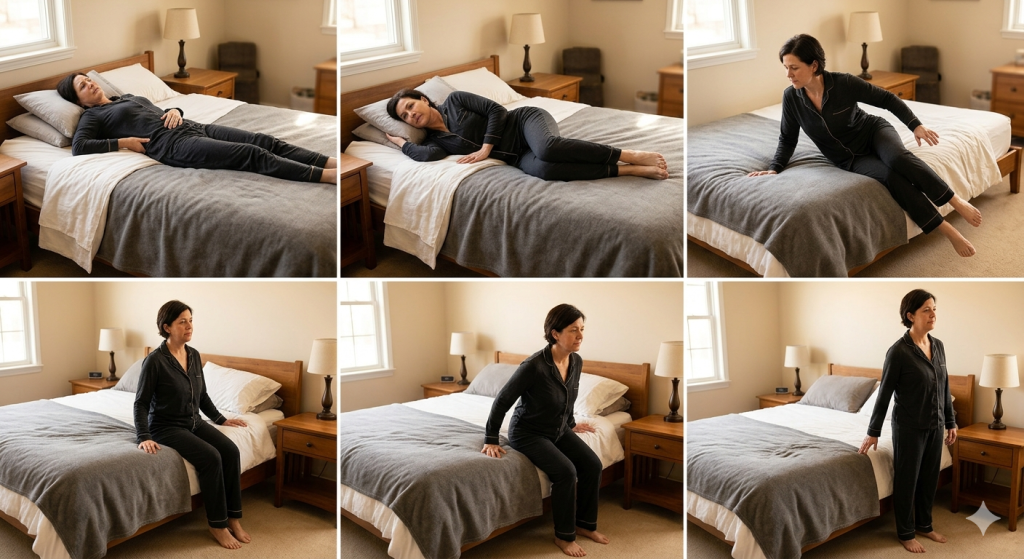
The best way to get out of bed without aggravating lower back pain is the “log roll” technique:
- Lying on your back, bend your knees toward your choice.
- In one motion, keeping your shoulders aligned with your hips and your core muscles engaged, roll onto one side of the body.
- Brace yourself by pressing your top hand into the bed and propping yourself up with your lower elbow. As you move your legs off the bed, keep your spine straight and your core muscles engaged.
- Press yourself up into a seated position, moving your legs and torso simultaneously. Stand up using your leg muscles, making sure not to round your spine.
Condition-Specific Sleep Position Recommendations
Best Sleep Position for Spinal Stenosis
People with spinal stenosis may feel the most comfortable sleeping in a fetal position. It can create more space between the vertebrae and alleviate pressure on irritated spinal nerves.
Best Sleep Position for Spondylolisthesis
People with spondylolisthesis may benefit from sleeping in a reclined position, with the torso propped up with pillows. This keeps your legs at an angle to your spine, which may minimize impact on the affected segment.
Best Sleep Position for Sciatica
If you have sciatica, sleeping on your side (with the affected side facing up) with a pillow between your knees may be the most comfortable. This position helps keep the spine aligned while preventing excess pressure on the sciatic nerve. Another option is to sleep on your back with your knees elevated.
Lower Back Pain Treatment Options
Lower back treatment options include heat/cold therapy, physical therapy, pain medications, massage therapy, chiropractic care, and surgery.
Heat/Cold Therapy
Heat and cold therapy are among the best at-home remedies for lower back pain. Heat therapy relaxes tense back muscles, prevents spasms, and improves blood flow. Cold therapy curbs inflammation and alleviates pain.
Physical Therapy
Physical therapy is a tried-and-true lower back pain treatment. It involves targeted exercises and stretches to:
- Improve mobility
- Strengthen the spine’s supportive muscles
- Correct imbalanced movement patterns
- Naturally reduce pain
Pain Medications
Your doctor may prescribe pain medications (like NSAIDs, muscle relaxants, etc.) to help you manage lower back pain while it heals. Though medications aren’t typically used as a long-term solution, they can be a valuable tool in your back pain recovery.
Massage Therapy
Massage can calm back muscle tension, boost circulation, and promote relaxation in people with lower back pain. It’s often used to complement other treatments, like physical therapy and medications, for persistent back pain.
Chiropractic Care
Chiropractors perform spinal and joint adjustments, along with other manual therapies, to improve spinal alignment. One major goal of chiropractic care is to bolster the body’s ability to heal itself. It can be very helpful for individuals with back pain from poor spinal alignment or back injuries.
Surgery is generally only used in severe cases of lower back pain that don’t improve after several months or years of non-surgical treatment. Many spinal conditions that cause lower back pain (like herniated disc, spinal stenosis, and nerve impingement) can be treated with spinal decompression surgery.
Spinal decompression surgery alleviates pressure on the spinal nerves, offering relief from back pain and neurological symptoms.
When to See a Spine Specialist
Contact a spine specialist if you experience:
- Lower back pain that doesn’t improve within four to six weeks of at-home care (gentle stretches, rest, and heat/cold therapy)
- Lower back pain that doesn’t improve with position changes
- Lower back pain with neurological symptoms, including radiating leg pain, numbness, weakness, or tingling
These symptoms point to a possible spinal condition, which may require physical therapy, medication, or, in rare cases, surgery. Thankfully, patients today have access to modern spine surgery solutions, like the TOPS System, to preserve mobility and improve outcomes from spinal decompression surgery.

David danced at his son’s wedding Bonnie explains why TOPS surgery was the right decision for her Wade is back to hiking Scott speaks about going to surgeryRegain your mobility with Premia Spine!




Regain your mobility with Premia Spine! Contact us now
Additionally, if you have any of the following red flag symptoms, go to the ER immediately, as you may be experiencing a medical emergency:
- Bowel or bladder dysfunction
- Sudden, severe lower back pain
- Sudden, progressive leg numbness
- Saddle anesthesia (numbness in the inner thighs, groin, buttocks, perineum)
FAQs
Is it bad to sleep on your stomach with lower back pain?
Yes, sleeping on your stomach can exacerbate lower back pain. Try sleeping on your side or back instead.
How should I sleep to relieve lower back pain fast?
The best sleeping positions to relieve lower back pain are:
- On your back with a pillow under your knees
- On your side with a pillow between your knees
How long does it take for sleep position changes to reduce back pain?
You may experience a mild improvement in back pain after shifting your sleep position. More dramatic improvements may take several months to appear.
What pillow is best for side sleepers with lower back pain?
The best pillow for side sleepers with lower back pain is a medium-firm to firm option with a high-loft design, meaning it’s around six inches high. You can also find a contoured pillow designed specifically for side sleeping.
Can sleeping wrong cause lower back pain?
Yes, sleeping in an unsupportive position, or on an unsupportive mattress, can cause lower back pain from muscle tension. In the long term, consistently sleeping “wrong” can contribute to chronic issues from increased pressure on the spine.
Should I sleep on a hard or soft mattress for lower back pain?
A medium-firm mattress is widely recommended for lower back pain.