



L5-S1 Exercises to Avoid: A Complete Guide with Spine-Safe Alternatives
Exercises to avoid with L5-S1 issues include heavy weightlifting (especially deadlifts), squats, sit-ups, toe-touches, twisting, golfing, gymnastics, running, contact sports, and other high-impact exercises. These activities place excessive impact on the L5-S1 level, which is vulnerable to damage because it bears most of your upper body weight, and it facilitates high-impact movements (bending, lifting, and twisting). The most common L5-S1 conditions that restrict exercise include herniated disc, degenerative disc disease, spondylolisthesis, spinal stenosis, and sciatica.
Keep reading to gain a complete understanding of which movements and exercises to avoid at L4-S1, along with safe alternatives to help you stay active with a spinal condition.

What is L5-S1? Understanding the Lumbosacral Junction
The L5-S1 spinal level includes the last bone of the lumbar spine (L5) and the first bone of the sacral spine (S1). Also known as the lumbosacral joint or lumbosacral junction, this is a transitional area of the lower back.
The Lumbar Spine Structure and Load Distribution
The lumbar spine consists of five vertebrae (L1, L2, L3, L4, and L5). L5, the lowest lumbar vertebra, connects to the sacrum (S1) at the lumbosacral joint. An intervertebral disc is located between each vertebra, including L5-S1, to absorb impact and cushion the spine.
L5-S1 is the main pelvis-to-spine transition point, meaning it helps pass loads from the spine to the pelvis or legs.
Why the L5-S1 Level is Especially Vulnerable
L5-S1’s exposure to high forces, impact, and compression leaves it particularly vulnerable to degeneration compared to other spinal regions. This susceptibility to degeneration is well-documented by clinical research:
- A Journal of Occupational Health study of over 1,000 postmenopausal women reported a 25.5% prevalence of severe disc degeneration at the L5-S1 spinal level.
- An Asian Spine Journal study reported that L5-S1 was one of the most common levels of disc degeneration with a rate of 46.6% among study participants, surpassed only by the L4-L5 level.
Common L5-S1 Conditions That Restrict Exercise
Herniated disc, bulging disc, degenerative disc disease, spondylolisthesis, spinal stenosis, and sciatica are among the most common L5-S1 conditions that may pose exercise restrictions.
Herniated or Bulging Disc
Herniated disc and bulging disc are similar, but not identical, conditions impacting an intervertebral disc.
- A herniated disc involves a crack in the tough outer disc material, through which the soft, jelly-like inner core can protrude into the spinal canal.
- With a bulging disc, the disc exterior weakens, causing the disc to bulge outward, but doesn’t crack.
An estimated 95% of herniated discs in patients aged 25 to 55 occur at the L5-S1 or L4-L5 level, according to StatPearls.
Degenerative Disc Disease
Degenerative disc disease, or DDD, refers to the process that your spinal discs undergo with age. With aging and gradual wear and tear, the discs weaken and lose water content, making them more prone to herniation.
According to Columbia University, by age 35, an estimated 30% of all people exhibit disc degeneration at at least one spinal level. The prevalence continually rises with age, and symptoms commonly include:
- Back pain that worsens when sitting, lifting, bending, or twisting
- Numbness or tingling in the lower extremities
- Leg weakness and foot drop (the foot slapping onto the pavement while walking due to lumbar nerve root compression)
Spondylolisthesis
L5-S1 spondylolisthesis occurs when the L5 vertebra slips down, resting on the S1 vertebra. This form of spondylolisthesis is most often caused by overuse or spondylolysis, a defect in the L5 pars interarticularis. In fact, isthmic spondylolisthesis, the term used for spondylolisthesis caused by a pars defect, most commonly occurs at the L5-S1 level.
Symptoms of L5-S1 spondylolisthesis include:
- Lower back pain that worsens with activity, especially lifting and bending
- Spasms in the hamstring muscles
- Lower back stiffness
- Neurological symptoms in the legs and/or feet, including tingling, numbness, and weakness
Spinal Stenosis
Spinal stenosis is the narrowing of the spinal canal, often due to age-related spinal degeneration (herniated disc, thickened ligaments, spondylolisthesis, etc.). As the condition progresses, it can result in nerve root compression and symptoms including:
- Persistent lower back pain that may radiate into the lower extremities
- Pain often improves when leaning slightly forward, as if pushing a shopping cart
- Numbness, weakness, or tingling in the lower extremities
- Difficulty standing, walking, or balancing
An estimated 75% of lumbar foraminal stenosis occurs at the L5-S1 level, according to the Journal of Orthopaedic Case Reports. Foraminal stenosis refers to the narrowing of the foramina (bony openings in the spine), potentially compressing spinal nerve roots where they exit the spine.
Sciatica
Sciatica is the compression of the sciatic nerve, which extends from the lower back through the buttocks and backs of the legs. Symptoms include pain, burning, tingling, and numbness that radiate from the lower back to the buttocks and down one or both legs. Sciatica can be caused by spinal conditions at L5-S1, including a herniated disc and spinal stenosis.
How Exercise Can Hurt (or Help) The L5-S1 Disc
High-impact exercise, deep twists, and deep forward bending (flexion) can hurt an injured L5-S1 disc by increasing compression and intensifying the pressure on the disc. Conversely, gentle, low-impact exercise can help with L5-L1 issues by supporting mobility, core strength, and flexibility, all of which can reduce discomfort and prevent excessive impact on the disc.
- Mobility: Walking, swimming, and low-impact aerobics can help you maintain physical fitness with a spinal condition. This encourages blood flow to the L5-S1 disc to promote hydration and healing.
- Core strength: Planks, bird-dog, and pelvic tilts safely build core strength, bolstering muscular support for the spine.
- Flexibility: Gentle stretches like cat-cow, knee-to-chest, and hamstring stretch help prevent tight muscles, which can increase pain sensitivity and contribute to biomechanical imbalances.
L5-S1 Exercises to Avoid (and Why)
The following exercises can exacerbate L5-S1 pain and should be swapped out with safer alternatives to prevent flare-ups.
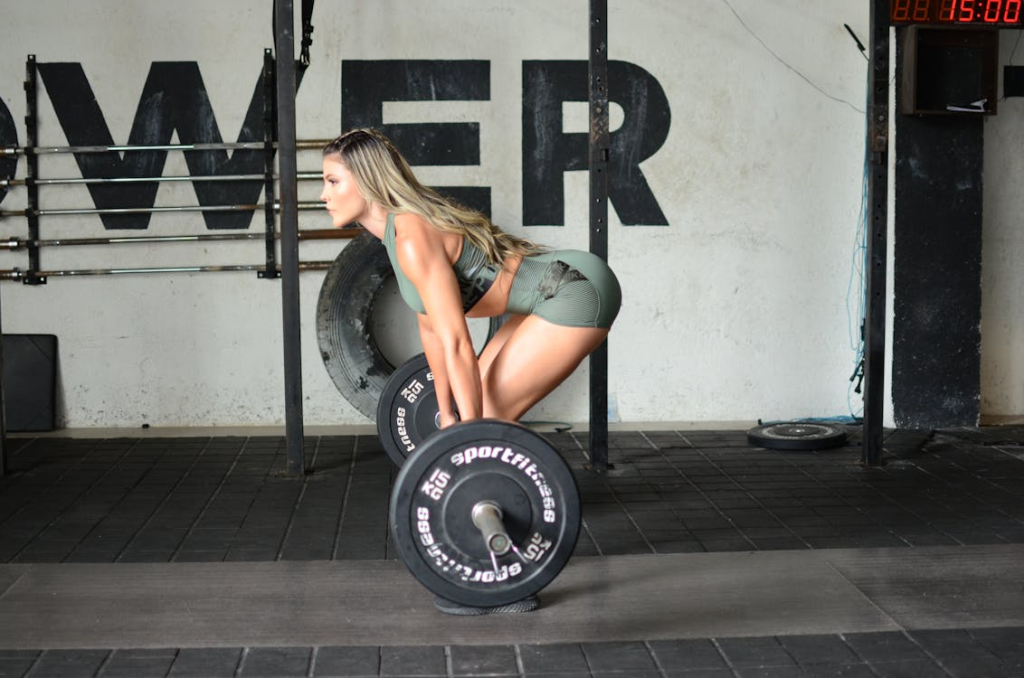
Deadlifts and Heavy Weighted Squats
- Reason to avoid: Intense compression and impact on the L5-S1 disc
- Safer alternatives for L5-S1 pain: Bridges, cable pull-throughs
A deadlift involves bending forward with bent knees in a hip-width stance to grasp a weighted barbell, then powering through the quad muscles to stand upright, lifting the weight with straight arms. While effective for full-body strengthening, especially in the glutes, back, and hamstrings, it places excessive impact on the lower spine.
Weighted squats involve performing a squat with dumbbells, a barbell, kettlebells, or other forms of resistance. This popular quad, glute, and hamstring strengthening exercise excessively loads the L5-S1 level.
Sit-Ups and Crunches
- Reason to avoid: Direct pressure on the L5-S1 disc, repetitive forward bending
- Safer alternative for L5-S1 pain: Planks, bird-dog, pelvic tilts
Sit-ups and crunches are both intended to activate and strengthen the core muscles by lifting the head, shoulders, or entire torso off the ground from a lying-down position with bent knees. This requires several repetitions of a flexion movement, which can strain the L5-S1 level. It can also be challenging to maintain perfect posture during sit-ups and crunches; if the core muscles disengage, it can lead to back strain.
Toe Touches and Standing Forward Folds
- Reason to avoid: Deep flexion, pressure on the L5-S1 disc
- Safer alternative for L5-S1 pain: Bird-dog, side planks, seated, or towel hamstring stretch
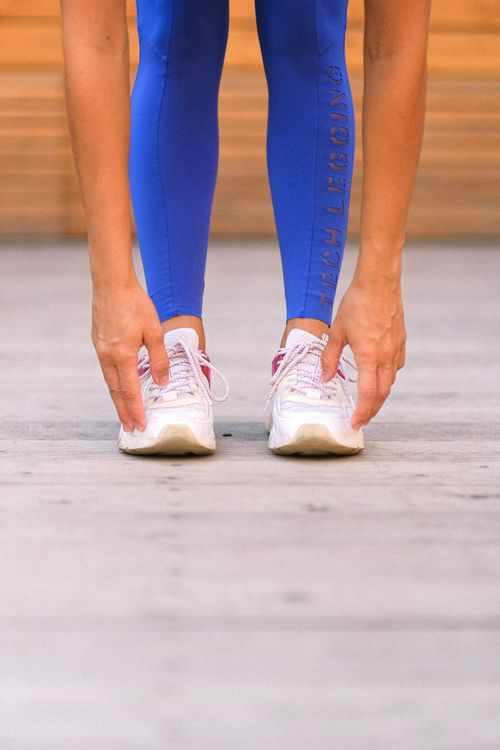
Toe touches involve lying flat on your back and reaching toward your legs, which are straight and pointing to the ceiling. While effective for core and oblique strengthening, this exercise requires deep flexion that can strain the L5-S1 disc. Standing forward folds, a common hamstring stretch, present the same issue because they require bending forward at the hips.
Straight Leg Raises
- Reason to avoid: Intense compression at L5-S1
- Safer alternative for L5-S1 pain: Bird-dog, glute bridges, pelvic tilts
Straight leg raises involve engaging the quads, core, and hip flexors by lifting one leg while lying down. Unfortunately, this movement can strain the lower back – in fact, experiencing pain in this position can indicate S1 or L5 nerve root irritation during the Straight Leg Raise (SLR) diagnostic test.
Russian Twists and Other Rotational Exercises
- Reason to avoid: Lumbar stress and compression from twisting
- Safer alternative for L5-S1 pain: Bird-dog, side planks, dead bug
A Russian twist is an oblique and core exercise that involves sitting with your back at a 45-degree angle, and your feet lifted a few inches from the floor, then rotating the arms and torso to either side. This and other rotational exercises (like bicycle crunches) place significant stress on the lumbar discs, which may worsen L5-S1 pain.
Golfing and Other Rotational Sports
- Reason to avoid: Repetitive, asymmetric twisting
- Safer alternative for L5-S1 pain: Walking, swimming, cycling

Golfers repetitively swing on their dominant side. The twist alone is enough to place intense stress on the spine, but combined with its repetitive, asymmetric nature, it can quickly lead to lower back pain. In fact, according to the Asian Journal of Sports Medicine, lower back pain from golf accounts for between 18% and 54% of all documented golf-related injuries.
High-Impact Cardio: Running, Jumping, and HIIT
- Reason to avoid: Repetitive impact
- Safer alternative for L5-S1 pain: Walking, swimming, stationary biking
While aerobic exercise is crucial for cardiovascular health, high-impact activities like running, jumping, and HIIT can exacerbate L5-S1 pain. The repetitive running and jumping motions compress and place impact on the lower vertebrae, potentially worsening symptoms.
Leg Presses and Loaded Hip Flexion
- Reason to avoid: Compressive load on the spine, lumbar flexion
- Safer alternative for L5-S1 pain: Bridges, wall sits
Leg presses work the quads, glutes, and hamstrings by using a machine to provide resistance as you press your legs outward from a seated position. When the legs bend close to the chest during a leg press, the spine tends to round. This, along with the added weight, can worsen lumbar pain.
Overhead Press and Axial Loading
- Reason to avoid: Intense spinal compression
- Safer alternative for L5-S1 pain: Seated dumbbell press, cable pull-throughs
Axial loading involves applying weight to the spine from above (typically above the head or shoulders). One exercise example is the overhead press, which involves pressing a barbell, dumbbell, or kettlebell from shoulder height to above your head. Overhead weight significantly compresses the entire spine, which can worsen pain from a herniated disc, bulging disc, or nerve impingement.
Intensive Yoga and Gymnastics: Deep Backbends and Forward Folds
- Reason to avoid: Intense twisting, flexion, and extension
- Safer alternative for L5-S1 pain: Cat-cow, knee-to-chest, hamstring stretch, pelvic tilts
While some yoga poses can benefit lower back pain through gentle stretching, certain poses involve deep twists, forward bends, and backbends. Key yoga poses to avoid with L5-S1 pain include:
- Camel pose
- Bow pose
- Wheel pose
- Upward-facing dog
- Twisted crescent lunge
- Dancer’s pose
- Fish pose
Is Gardening Safe for L5-S1?
While not an exercise in the traditional sense, gardening is a popular hobby that’s widely considered mild to moderate-intensity exercise, burning as many calories as many sports (according to Harvard Health). Unfortunately, it often involves repetitive bending, twisting, and lifting that can exacerbate pain.
To safely garden with L5-S1 pain, you’ll need to implement a few modifications:
- Start with a gentle warm-up, just as you would for any workout.
- Refrain from lifting, especially heavy objects.
- Use raised garden beds and planters to limit forward bending.
- Focus on proper posture, whether you’re sitting, standing, walking, or kneeling.
- Take frequent breaks and switch between activities (like weeding, mowing, and trimming) every 15 to 20 minutes.

Exercises to Avoid with a Herniated or Bulging L5-S1 Disc
The worst exercises for a herniated or bulging L5-S1 disc are those that involve:
- Heavy lifting, like deadlifts and weighted squats
- Deep spinal flexion, like toe touches
- Rotational movements, like Russian twists and golfing
- High-impact exercise, like running
- Leg presses and related exercises
Exercises to Avoid with L5-S1 Spinal Stenosis
The worst exercises for L5-S1 spinal stenosis involve:
- Back extension (backbends), which further narrows the spinal canal and may worsen nerve compression symptoms
- Prolonged standing or walking
- Heavy lifting
- Deep spinal flexion
- Rotational movements
- High-impact exercise
- Leg presses and related exercises
Exercises involving slight flexion (forward bending) are often ideal for lumbar spinal stenosis, as this position helps open up the spinal canal to prevent discomfort.
Exercises to Avoid with Sciatica from L5-S1
The worst exercises for sciatica include:
- High-impact exercise
- Sit-ups and crunches
- Toe-touches and forward bending
- Weighted squats
- Bent-over rowing and cycling
- Deep hamstring stretches, which can worsen sciatic nerve irritation
Safe L5-S1 Exercises: What to Do Instead
With an L5-S1 issue, it’s vital to stay active with safe exercises to build strong muscles that can absorb impact and support the spine. Low-impact cardio is also crucial to maintain physical fitness and cardiovascular health.
Refer to the following exercise alternatives to build your spine-safe routine.
Pelvic Tilts
The pelvic tilt exercise builds deep core stability to help prevent back strain. It’s very gentle, making it a good starting point for people managing significant L5-S1 pain. You can start your exercise session with pelvic tilts to “wake up” your core.
- Lie on your back with your knees bent and feet flat on the floor, hip-width apart.
- Engage your core muscles, drawing your core up toward your navel, and tilt your pelvis back to press your lower back into the floor.
- Hold this position, breathing throughout with your core engaged, for around 10 seconds.
- Release and repeat for around 10 sets.
Hamstring Stretch with Seated or Towel Modification
A basic hamstring stretch is an excellent way to offset the hamstring muscle tension that tends to occur with L5-S1 issues. The most common form of this stretch is to sit with both legs extended in front of you and reach toward your toes. However, many people with spinal conditions require a modification, including this seated version.
- Sit on the edge of a chair and straighten one leg out in front of you, placing your heel on the floor.
- Keeping your spine straight, gently lean forward to reach toward your foot.
- Hold this position while breathing deeply for around 30 seconds before switching legs.
For greater control and leverage, you can also use a towel to stretch your hamstrings.
- Lie on your back with your knees bent and your feet flat on the floor.
- Loop a towel around the back of one thigh, using it to gently pull your leg toward you. To deepen the stretch, you can loop the towel around your calf or heel.
- Breathe deeply in the stretch for 30 seconds, then switch to the other leg.
Knee-to-Chest Stretch
The knee-to-chest stretch is a simple, gentle way to stretch the muscles around the L5-S1 level. It’s a good option for people experiencing significant lower back pain and who can’t perform more intensive stretches.
- Begin lying on the ground, face up, with your knees bent and feet flat on the floor.
- Gently pull one knee to your chest. If you feel able, you can straighten the other leg to deepen the stretch.
- Breathe deeply and when you’re ready, switch to the other leg.
Cable Pull-Throughs
Cable pull-throughs are a safer alternative to deadlifts for glute and hamstring strengthening. With proper form, this exercise also supports deep core stability. You’ll need a cable machine with an adjustable pulley set to the lowest position, or a resistance band securely attached to a squat rack or other stable structure. Start with a very light weight to prevent back strain.
- Take hold of the handles or resistance band and stand a few feet away from the machine/structure, facing away from it. The band/cable shouldn’t have any slack.
- With your feet firmly planted on the floor, hinge at the hips, holding the handle or band between your legs.
- Send your hips behind you, bending at the knees and maintaining the relationship between your hands and hips. Keep your back flat and spine in alignment.
- Engage your glutes and return to the starting position, pressing your hips forward.
- Start with approximately four sets of eight reps, gradually increasing over time.
Bridges
Bridges use your body weight to strengthen the core, glute, and hamstring muscles. They also act as a gentle active stretch for the hip flexors and promote overall stability in the abdominal muscles.
- Start by lying on your back with your feet flat on the floor and your arms straight by your sides.
- Engage your core muscles to lift your hips off the ground, creating a straight line from your knees to your shoulders.
- Hold this position for a few beats, breathing deeply.
- Gently lower your hips to the floor and repeat.
Wall Sits
A wall sit is essentially a squat that uses a wall for support. It engages the glutes, hamstrings, quads, calves, and core muscles, making it an excellent lower-body strengthening exercise while protecting the spine from excessive strain.
- Start with your back against a solid wall, with your feet hip-width apart and your toes pointing forward.
- Keeping your back against the wall, walk your feet a few steps in front of you. Engage your core to bend your knees and let your back slide down the wall until your thighs are parallel with the floor.
- Hold this squat for up to one minute, continuing to engage your core and legs. If you feel your back engage, press your palms against the wall and bend forward at the hips to slowly come out of the exercise.
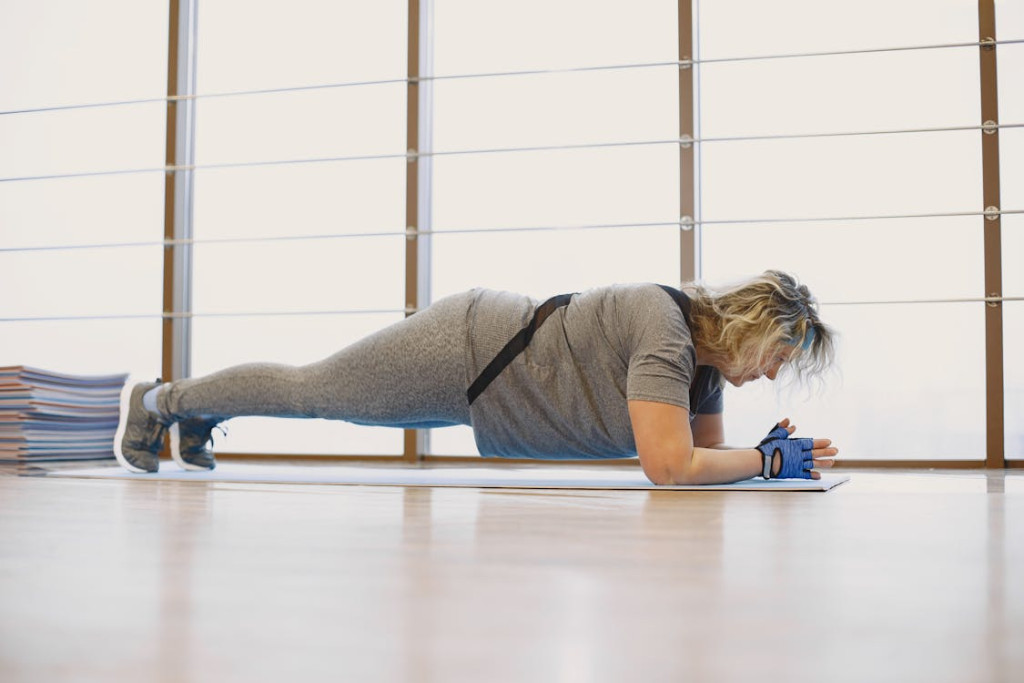
Planks
The plank exercise is a popular choice for building core stability and strengthening the glute muscles. It exclusively uses your body weight, so it’s gentle enough for many forms of L5-S1 pain.
- Lie on your belly with your forearms flat on the ground. You can use an exercise mat for extra padding under your elbows.
- Tuck your toes and engage your core to lift your body off the floor. Only your forearms and toes should be touching the floor. If this is too difficult, you can lower your knees to the floor.
- As you hold this position, make sure your spine stays in a neutral position.
- Hold for 30 seconds to a minute before gently lowering yourself back to the floor.
Cat-Cow
It’s simple but effective: Cat-cow is one of the most widely recommended yoga positions for L5-S1 pain. It’s technically a medley of two yoga poses, the cat and the cow, and you’ll flow between them to gently release tension in the lower back.
- Start on your hands and knees in a tabletop position.
- Slowly inhale to curve your lower back, bringing your face toward the ceiling and your belly toward the floor.
- Slowly exhale to draw your abdomen in, bringing your head toward your pelvis and arching your spine like a cat.
Bird-Dog
Bird-dog is another combo of two yoga poses that builds balance, core stability, and back muscle strength. It can also help improve your posture, which may help lessen your back pain over time.
- Begin on your hands and knees, in a tabletop position.
- Engage your core to lift your right arm straight in front of you and your left leg straight behind you. Try to create a straight line from fingertip to toe.
- Keeping your core engaged, hold this position for a few seconds, return to the starting position, and repeat on the other side.
Dead Bug
The dead bug exercise is considered one of the safest, most effective core-strengthening exercises for older adults and individuals with mobility concerns. You can do it on the ground or even on your bed, making it accessible even with lower back pain.
- Lie on your back on a flat surface with your knees bent, your feet flat on the surface, and your arms relaxed by your sides.
- Inhale, then exhale to engage your core muscles, drawing your core up toward your navel.
- Keep breathing deeply, and one at a time, lift your feet off the floor to bend your knees at 90-degree angles. Raise both arms straight upward, positioning your hands above your shoulders.
- On an exhale, straighten your leg toward the floor so it hovers a few inches from the ground, and bring your opposite arm overhead, so it’s next to your ear. Keep your core engaged throughout.
- Repeat on the other side, and complete around 10 reps.
If this exercise is too challenging, modify it by keeping your feet flat on the floor with your knees bent, extending only your arms (one at a time) with your core engaged.
How to Tell if an Exercise Is Making Your L5-S1 Worse
If you experience any of the following signs that an exercise is worsening L5-S1 pain, stop immediately:
- Sharp, radiating, or electric shock-like pain
- New or worsening numbness or tingling in the lower back or legs
- Worsened pain or stiffness the morning after performing an exercise
After experiencing these symptoms, you may need to avoid the exercise altogether or adjust your form to prevent L5-S1 strain. Working with a physical therapist can make this process easier; your PT can provide a personalized exercise regimen and form adjustments to prevent flare-ups.
Warning Signs: Stop Exercising and Seek Emergency Care
The following red flag symptoms point to cauda equina syndrome, a medical emergency that requires immediate care to prevent permanent nerve damage. Warning signs to look out for include:
- Changes in bladder or bowel control
- Sudden or severe neurological symptoms (radiating pain, tingling, numbness, weakness)
- Sudden, severe onset of pain
- Saddle anesthesia (loss of sensation in the inner thighs, groin, and buttocks)
Additionally, seek emergency medical care if you experience any of the following warning signs of a spinal infection:
- Fever
- Chills
- Tenderness and severe pain around the affected part of the spine
- Unexplained weight loss
Daily Habits to Protect the L5-S1 Level
Proper posture, sleeping positions, and lifting mechanics are paramount to protecting the L5-S1 level against degeneration and injuries.
Good Posture at Work
Poor posture causes an imbalanced distribution of impact on the spine, including the L5-S1 segment. This imbalance accelerates spinal degeneration and can cause lower back pain. Posture correction is particularly crucial for people with sedentary jobs (which account for over 80% of jobs in the U.S.), as prolonged sitting places considerable impact on the L5-S1 level. While sitting can provide temporary relief from certain spinal conditions, including spinal stenosis, extended periods of sitting can be harmful. If you have a desk job, try to stand and walk around at least once per hour, and invest in a chair with robust lumbar support. You can also consider investing in a standing desk to break up long sedentary periods.
Spine-Friendly Sleeping Positions
We spend about a third of our lives sleeping; it’s no wonder that sleeping position can impact spinal health.
- The worst sleeping position for lower back pain is on your stomach because it deepens the lumbar curve, placing more impact on the lumbar spine.
- The best sleeping positions for lower back pain are on your back with a pillow under your knees or on your stomach with a pillow in between your knees. Both keep the spine in alignment while preventing uncomfortable pressure points.
Safe Lifting Mechanics
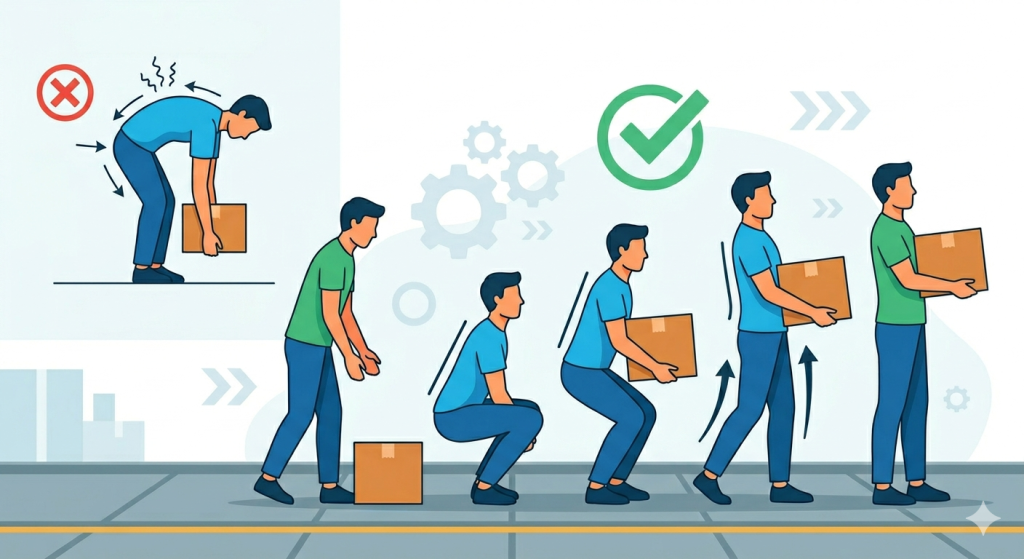
Whether you’re strength training or completing chores around the house, safe lifting mechanics are critical to preventing L5-S1 pain flare-ups. First and foremost, lift with your legs by bending your knees while keeping your back straight (never round your spine). Keep the weight as close to your body as possible, and push through your heels to lift, engaging your glutes and legs.
Before trying any new exercise, either:
- Work with a physical therapist or personal trainer to ensure proper posture
- Conduct online research to learn about the correct technique and posture
These tips help prevent improper lifting techniques, which can lead to back injuries and pain.
When to Rest vs. When to Exercise with L5-S1 Pain
Gentle, low-impact exercise is usually beneficial for L5-S1 pain because it prevents stiffness, promotes blood circulation, and puts you on the path to healing. But it may be best to rest if you were recently injured or experience sharp, shooting, severe pain during movement.
| Signs to Rest | Signs to Exercise |
| First 48 to 72 hours after an injury or severe pain flare-upSevere, sharp, or radiating painPain significantly worsens during exercise | Pain levels are manageable during gentle exerciseNo sharp or radiating pain during movementYou have muscle soreness (dull, achy discomfort after exercise), but not sharp or severe pain |
Avoid Prolonged Bed Rest
Bed rest can be tempting when you’re struggling with L5 S1 pain. However, prolonged or excessive bed rest limits circulation to the spine, contributes to muscle weakness, and ultimately slows the healing process. After an injury or flare-up, limit bed rest to 24 to 48 hours to prevent stiffness and slowed recovery.
Lifestyle Factors That Worsen L5-S1 Conditions
Smoking, being overweight or obese, and poor sleep quality can adversely affect the L5-S1 segment.
Smoking and Its Impact on Spinal Health
Smoking increases the risk of lumbar herniation, spondylolisthesis, and spinal stenosis, according to Brain and Spine. Smoking compromises spinal health by restricting circulation; nicotine causes blood vessel constriction, reducing the flow of oxygen and nutrients to the spine. Smoking also worsens inflammation, which can exacerbate various L5-S1 conditions.
Weight Management
Being overweight increases the impact on the L5-S1 segment. Whether you’re sitting, standing, walking, or exercising, excess pounds stress the lower spine. Reaching a healthy weight alleviates this extra strain to protect the spine.
Sleep Quality
Not sleeping enough can jeopardize your spinal health. Sleep allows your body to repair damaged tissue and manage inflammation. Without this restorative process, you may experience worsened back pain and a slower recovery process.
When Conservative Care Isn’t Enough: Surgical Treatment Options from Premia Spine
When lumbar pain doesn’t respond to six to 12 months of conservative care (physical therapy, medications, lifestyle changes), surgery may be the next available option. While generations past were confined to invasive options, including spinal fusion, patients today may consider the TOPS System.

Regain your mobility with Premia Spine! Contact us now
David danced at his son’s wedding Bonnie explains why TOPS surgery was the right decision for her Wade is back to hiking Scott speaks about going to surgeryRegain your mobility with Premia Spine!



The TOPS System is an FDA-approved dynamic implant device for spinal stenosis and spondylolisthesis at L3-L5, L3-L4, and L2-L3. It replaces the tissues removed during decompression surgery and restores a controlled range of motion in the spine. It has earned a superior-to-fusion claim from the FDA, with a clinical success rate of 77% after two years (compared to 24% of fusion patients) in the TOPS System U.S. Clinical Study.
FAQs: L5-S1 and Exercise
What are the worst exercises for L5-S1?
The worst exercises for L5-S1 are deadlifts, weighted squats, sit-ups/crunches, toe touches, standing forward folds, straight leg raises, Russian twists, golfing, high-impact cardio, leg presses, overhead presses, intensive yoga, and gymnastics.
Can I lift weights with L5-S1 problems?
While you can lift weights with L5-S1 problems, you’ll need to modify your routine by:
- Lowering the weight and number of reps
- Focusing on proper form by lifting with your legs and engaging your core
- Avoiding weighted squats, rotational exercises, loaded hip flexion, and axial loading
- Stopping immediately if you experience sudden, sharp, or shooting pain
Is walking good for L5-S1 disc pain?
Walking is typically quite good for L5-S1 disc pain because it’s a low-impact activity to help with blood circulation and mobility. Start with short, five to 10-minute walks a few times daily and work up to longer durations as the disc heals.
Can I do yoga with an L5-S1 issue?
You can do modified yoga with an L5-S1 issue, making sure to avoid deep flexion (forward folds), extension (backbends), and deep or repetitive twisting. Stop immediately if you experience pain or neurological symptoms.
How long does it take for L5-S1 to heal?
A bulging L5-S1 disc can take anywhere from four to 12 weeks to heal. Severe cases may require surgery, which can involve around six months of recovery.
