



Spondylolisthesis in Athletes: Treatment and Return to Sports
Spondylolisthesis is a prevalent spinal condition among athletes. While many older adults experience spondylolisthesis due to spinal degeneration, certain sports place excessive strain on the spine that can lead to spondylolisthesis, even in children, teens, and young adults.

Thankfully, modern spinal treatments have created a clear path to relief from spondylolisthesis, and many athletes can successfully return to their sport of choice. Continue reading for more information about spondylolisthesis in athletes and how it’s treated.
What Causes Spondylolisthesis in Athletes?
Spondylolisthesis in athletes is caused by repeated stress on the lumbar spine, often in movements that require spinal hyperextension.
Repetitive strain on the spine can cause spondylolisthesis by weakening the vertebrae and stretching the spinal ligaments. This compromises the spine’s stability, causing a vertebra to slip out of position. Spondylolisthesis in athletes most often affects the lumbar spine, because it’s highly flexible and weight-bearing, often taking the brunt of the force from physical activity.
Sports and physical activities that require the spine to be in hyperextension have higher incidences of spondylolisthesis. This is because when the spine is in hyperextension, it’s not as effectively supported by the abdominal and back muscles. This leaves the vertebrae to bear a significant amount of impact, creating the risk of fractures, stretched ligaments, and general instability.
Sport-Specific Risks for Spondylolisthesis
Sport-specific risks for spondylolisthesis include:
- Repeated spinal hyperextension and twisting, like in gymnastics, baseball, and cricket
- Bearing weight on the lumbar spine, like in wrestling and weightlifting
- Repetitive motions involving the back, like in rowing
- Risk of sudden impact to the spine, like in football and other contact sports
Genetic Factors and Spondylolisthesis
Some athletes are at an increased risk of developing spondylolisthesis due to genetic factors. For example, genetics can cause a thin pars area or weak hypoplastic facet joints. Both of these characteristics increase the risk of spinal instability and a displaced vertebra.
Additionally, some children are born with spondylolisthesis, which can worsen throughout childhood, especially if they participate in sports.
Professional Athletes with Spondylolisthesis
Considering that active individuals face multiple risk factors for spondylolisthesis, it’s no surprise that many professional athletes have been diagnosed with the condition.
- Steve Nash, basketball player
- Andre Agassi, tennis player
- Tiger Woods, golf player
- Molly Neinstein, gymnast
What Sports Should Be Avoided With Spondylolisthesis?
The sports that should be avoided with spondylolisthesis include:
- Gymnastics: Gymnastics requires the spine to be in extreme hyperextension, placing great impact on the lumbar vertebrae.
- Weightlifting: Weightlifting can place excessive strain on the lumbar spine, especially if the weightlifter doesn’t use proper technique and posture.
- Skiing: Skiing (particularly downhill skiing) puts a high amount of impact on the vertebrae, making it one of the sports with the highest incidence of spondylolisthesis.
- Diving: Diving repeatedly forces the spine into hyperextension, leading to a high risk of spondylolisthesis.
- Rowing: Rowing involves a repetitive pulling motion with resistance in a seated position, which places significant strain on the lumbar spine over time.
- Wrestling: Wrestling can force the spine into hyperextension and require the lumbar spine to bear significant weight, creating a heightened risk of spondylolisthesis.
- Cricket: Cricket involves hyperextending the spine through repetitive twisting motions.
- Baseball: Similar to cricket, baseball requires the spine to repeatedly twist excessively, creating the risk of lumbar spondylolisthesis.
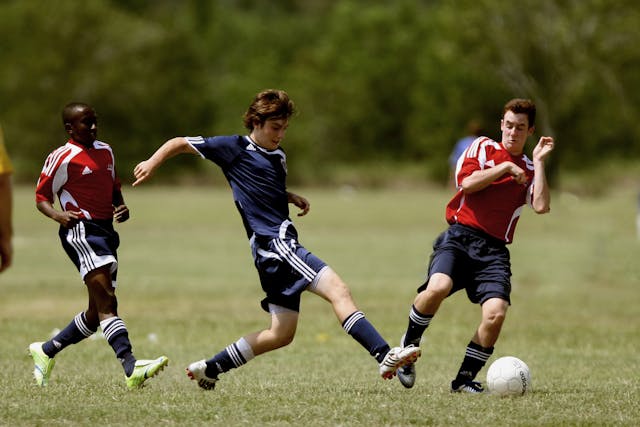
- Soccer: Soccer involves repeated lumbar hyperextension and rotation, making it one of the sports with a high incidence of spondylolisthesis.
What Sports Can You Do With Spondylolisthesis?
The sports that you can do with spondylolisthesis include:
- Swimming: Swimming and water aerobics provide gentle resistance to encourage muscle strength without placing an impact on the spine. This makes it one of the most commonly recommended physical activities for athletes with spondylolisthesis.
- Cycling: Cycling is a low-impact activity that keeps the spine leaning slightly forward, which is comfortable for some people with spondylolisthesis.
- Zumba: Zumba is a dance workout that builds stamina and physical fitness without straining the spine. It can help people with spondylolisthesis remain active without flaring up their symptoms.
- Pilates: Pilates is a form of low-intensity exercise that can provide therapeutic benefits for spondylolisthesis patients. It gently builds core, back, and leg strength without forcing the spine into hyperextension. Pilates also supports improved posture and spinal align
- Walking and hiking: Walking and hiking are low impact and don’t involve extreme spinal positions. They can help people with spondylolisthesis remain active without causing symptom flare-ups.
In general, low-impact activities that don’t require spinal hyperextension or excessive spinal rotation are safe for people with spondylolisthesis. Nonetheless, talk to your doctor before starting any new type of exercise if you’ve been diagnosed with spondylolisthesis.
How Fast Is It Possible to Return to Sports After Spondylolisthesis Surgery?
It’s possible to return to sports after spondylolisthesis surgery as fast as three to six months after surgery.
Factors that may impact the speed of your return to sports after spondylolisthesis surgery include:
- Age: Older individuals usually require more time to recover after surgery.
- Underlying medical conditions: Patients with underlying medical conditions may have added restrictions during the surgery recovery process, making their return to sports slower.
- Adherence to the surgeon’s aftercare instructions: Following all of your surgeon’s post-operative instructions is essential to making a quick return to sports. For the fastest possible recovery, adhere to all of the instructions, such as attending follow-up appointments and avoiding certain activities.
- Physical therapy: Seeing a physical therapist consistently after spondylolisthesis surgery can help you make a faster return to sports. A physical therapist can provide exercises for improved muscle strength, stretches to alleviate tension and alternative therapies to alleviate inflammation (such as heat/cold therapy).
- Type of spondylolisthesis surgery: Patients who undergo minimally-invasive spondylolisthesis surgery without fusion can often return to sports much faster than those who undergo conventional spinal fusion.
- Phased Return-to-Play Protocols
- A phased return-to-play protocol can help you return to sports as quickly as possible after having spondylolisthesis.
- Gradual activity increases based on the athlete’s condition, the particular sport, and individual needs
- Support from a physical therapist to safely regain muscle strength and flexibility
- Ongoing pain management strategies, such as heat and cold therapy, homeopathic topicals, massage therapy, and relaxation techniques
- Conservative vs. Surgical Management for Athletes
- Choosing between conservative and surgical spondylolisthesis management for athletes can be complex, to say the least. It’s a nuanced decision that’s different for every individual—you and your doctor will need to work together to determine the best strategy for your needs.
- With that in mind, many athletes choose conservative management because while younger patients are in better general health than older adults (and therefore have a lower risk of certain surgical complications), they have more life left to live. This means there’s more time for other complications (like adjacent segment degeneration from spinal fusion) to develop. By sticking to conservative spondylolisthesis, athletes can avoid this altogether.
- Conservative management can also allow for an easier return to sports, as it spares the athlete from the tissue damage and trauma associated with surgery. Surgery can also lead to scar tissue (tough, fibrous tissue that develops in response to trauma), which can cause pain and stiffness down the line.
- Ultimately, while conservative management is preferable for athletes with spondylolisthesis, when these methods fail to offer improvement, or if the patient experiences debilitating symptoms, surgery may be the best remaining option.
Spondylolisthesis Surgery for Athletes
Surgery is a spondylolisthesis treatment option for athletes in severe cases. It involves restoring spinal stability and alleviating any spinal nerve impingement.
Traditionally, surgery for spondylolisthesis involves decompression with spinal fusion. Spinal decompression procedures resolve nerve compression by removing any tissue that’s impinging on a spinal nerve. Types of spinal decompression include:
- Laminectomy, during which some or all of the lamina is removed. The lamina is a piece of bone that covers the back of the spinal canal.
- Discectomy, during which damaged spinal disc tissue is removed. A spinal disc is located in between each vertebra of the spine, providing shock absorption to prevent damage.
- Foraminotomy, during which the foramen are enlarged, creates more space for the nerve roots that extend from the spinal canal.
Spinal fusion restores stability in the spine to resolve spondylolisthesis symptoms. It involves placing bone graft material in between the affected vertebrae. The graft stimulates bone formation, causing the vertebrae to fuse, eventually becoming a single spinal segment.
Fusion can effectively treat spondylolisthesis in athletes by stabilizing the affected vertebrae. However, it also eliminates all motion at the fused spinal segment. Especially for athletes who rely on spinal mobility to successfully play their sport, this procedure can be detrimental to their athletic careers.
Regain your mobility with Premia Spine! Contact us now
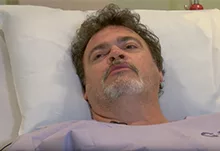
David danced at his son’s wedding Bonnie explains why TOPS surgery was the right decision for her Wade is back to hiking Scott speaks about going to surgeryInspired by motion, driven by innovation



Additionally, spinal fusion can lead to degeneration of the adjacent vertebrae. This risk is heightened in athletes who place a significant impact on their spines.
Non-Fusion Implants for Athletes with Lumbar Spondylolisthesis
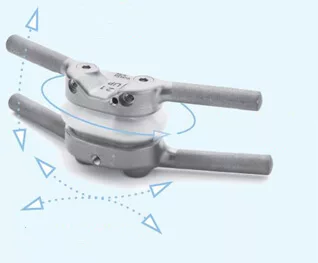
Thankfully, athletes can now opt for non-fusion spinal implants like the TOPS System to treat spondylolisthesis without fusion. The TOPS System is a mechanical device that restores a controlled range of motion in the spine. It alleviates lumbar spondylolisthesis symptoms while allowing the spine to move in all directions. Additionally, TOPS facilitates a far faster recovery process than that of spinal fusion.
To learn more about the TOPS system for spondylolisthesis in athletes, schedule an appointment with a qualified spine specialist near you.
Performance Considerations After Treatment
These performance considerations after treatment for spondylolisthesis in athletes can help prevent recurring pain and ensure a smooth recovery:
- The athlete’s return should be gradual and structured, ensuring they feel engaged and reintegrated into the team without pushing too hard and causing more damage.
- A rehabilitation program rooted in stretching and strengthening exercises can give the athlete a base from which to build.
- Athletes should consider seeing a physical therapist with knowledge of or experience in their particular sport, as needs can vary greatly based on the activity.
- Parents, coaches, and the athlete’s care team should be aligned on the recovery process to promote adherence.
Preventing Recurrence in High-Impact Sports
To prevent spondylolisthesis recurrence in high-impact sports, consider these recommendations:
- Don’t rush the recovery, and strictly adhere to all activity restrictions. Athletes shouldn’t return to various movements and activities until definitively cleared by their doctor.
- Focus on preventative strategies, like rest, posture, and proper biomechanics.
- Consider ongoing training or physical therapy to ensure any warning signs are addressed as soon as possible.