



L4 L5 Disc Herniation Explained
L4-L5 disc herniation is a common spinal condition that occurs when the disc between the L4 and L5 vertebrae becomes weakened or damaged. This causes the disc to protrude beyond its usual boundaries in the spinal canal and potentially press on nearby spinal nerves, causing lower back pain, sciatica, and leg muscle weakness. L4-L5 is the second most common level for disc herniation (behind only L5-S1) and accounts for 15 to 20% of cases.
In this article, we’ll explore L4-L5 herniated disc symptoms, treatments, and recovery times to help you overcome this common spinal concern.

What Is L4-L5 Disc Herniation?
Definition: An L4-L5 disc herniation occurs when the spinal disc between the L4 and L5 vertebrae becomes damaged. It may flatten, or the soft disc interior (nucleus) may press through a crack in the tough exterior (annulus).
- Prevalence: 1 to 3% of the population experiences lumbar disc herniation each year. 95% of cases occur at the L4-L5 or L5-S1 levels.
- Herniated vs. bulging disc: A bulging disc is a type of herniated disc that occurs when the disc weakens and flattens, usually due to normal age-related changes.
Anatomy of the L4-L5 Spinal Segment
The anatomy of the L4-L5 spinal segment includes vertebral bodies, vertebral foramina, bony structures (pedicles, laminae, and spinous, transverse, and articular processes), spinal nerves, ligaments, intervertebral discs, and the cauda equina.
- Vertebral bodies make up the bulk of the vertebrae. These weight-bearing, cylindrical bones help shield the spinal cord and connect to the intervertebral discs. Vertebral bodies are particularly large in the lumbar spine, as they undergo more impact than in other spinal regions.
- Vertebral foramina are openings in the spine that allow the spinal nerves to pass through. The L4-L5 foramen encircles the L4 spinal nerve, connecting it with other lumbar nerves.
- Pedicles are cylindrical pieces of bone that extend from the backs of the vertebral bodies. Two pedicles extend from each vertebral body in the spine to protect the spinal cord and nerves while connecting the vertebra’s front and back sections.
- Laminae are flat pieces of bone that create the back portion of the vertebral arch. Each vertebra has two laminae, one on either side, to protect the spinal cord and nerves while stabilizing the spine and facilitating motion.
- Spinous processes are small bony projections that extend outward from each vertebra. Muscles and ligaments responsible for posture and active motion attach to it for stability and leverage. The lumbar spinous processes are especially short and robust.
- Transverse processes are bony projections that extend off the sides of each vertebra, like wings. Similar to spinous processes, they help attach muscles and ligaments to the spine.
- Articular processes are bony projections located where the lamina and pedicles meet on each vertebra. They help stabilize the spine.
- Spinal nerves at the L4-L5 segment supply sensation to the muscles in the hips and knees. A herniated disc at L4-L5 can compress these nerves, leading to neurological symptoms.
- Ligaments at the L4-L5 level allow you to twist and extend the spine without compromising its structural integrity.
- Intervertebral discs are cushion-like structures that absorb impact and protect the structures and tissues throughout your spine. They can wear down over time, leading to conditions like disc herniation. The anatomy of these discs includes:
- The nucleus pulposus is a gel-like inner core that acts as a shock absorber.
- The annulus fibrosus, the disc exterior, consists of concentric layers of collagen fibers.
- When a disc is herniated, a crack develops in the annulus and the nucleus protrudes outward into the spinal canal.
- The cauda equina is a collection (or sac) of nerve roots that sits under the spinal cord. In most adults, the spinal cord ends at the L1-L2 region, with the cauda equina just beneath it. The nerves within the cauda equina transmit and receive messages from the pelvic organs and lower extremities.
Types of L4-L5 Disc Herniation
The types of L4-L5 disc herniation include bulge, protrusion, extrusion, and sequestration.
- A disc bulge occurs when the disc flattens, typically due to normal age-related degeneration.
- A disc protrusion occurs when the disc remains in one piece, but protrudes into the spinal canal, where it may compress nearby nerves.
- A disc extrusion occurs when the nucleus presses through a crack or tear in the annulus, with the soft tissue still attached to the disc.
- A disc sequestration occurs when herniated disc material detaches completely from the disc.
Paradoxically, research suggests that more severe disc herniations are more likely to fully resolve on their own, likely due to a robust immune response that stimulates resorption. Sequestered discs have a 96% probability of spontaneous resorption, compared to a 13% probability for bulging discs, according to Cureus.
Which Nerve Is Affected by L4-L5?
L4-L5 disc herniation most often affects the L5 nerve root, although it may also affect the L4 nerve root. Understanding the L4 and L5 dermatomes (the areas of skin innervated by a spinal nerve root) and myotomes (the group of muscles innervated by a spinal nerve root) can indicate the compressed nerve root.
- The L5 dermatome includes the:
- Lower back
- Front and outside of calf
- Top and bottom of foot
- The first four toes
- The L5 myotome primarily includes big toe extension (lifting the big toe upward)
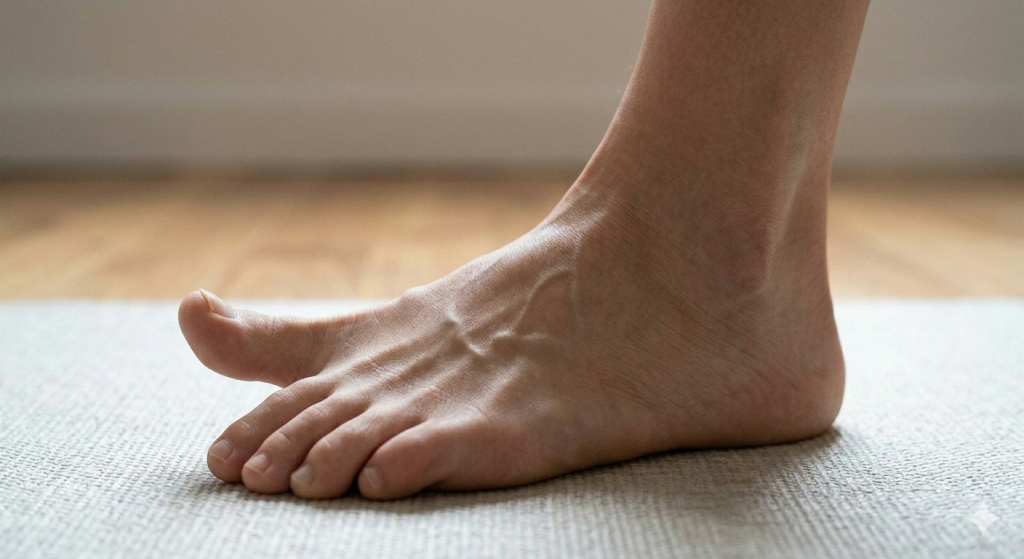
- The L4 dermatome includes the:
- Lower back
- Front of thigh
- Front of calf
- Knee area
- Inside of ankle
- The L4 myotome primarily includes ankle dorsiflexion (lifting the toes upward/flexing the foot)
Symptoms of L4-L5 Disc Herniation
The symptoms of L4-L5 disc herniation are lower back pain, sciatica, back muscle spasms, numbness, weakness, and/or tingling that radiates into the lower extremities.
Lower Back Pain from L4-L5 Disc Herniation
L4-L5 disc herniation typically causes lower back pain. This pain may be continuous or intermittent, occurring only when a movement or position flares up the affected nerves.
Pain from an L4-L5 disc herniation may feel sharp and severe, especially when you’re physically active. For some people, this pain improves when they’re seated or lying down.
Sciatica from L4-L5 Disc Herniation
Sciatica occurs when the sciatic nerve is pinched or compressed. The sciatic nerve extends from the lower back through the buttocks and down the backs of the legs. So, sciatica symptoms affect the lower back and lower extremities.
L4-L5 disc herniation is a fairly common cause of sciatica. This is because a herniated disc at this level of the spine can press on the sciatic nerve, causing the following symptoms:
- Pain (often described as a burning or electric shock-like sensation) that radiates from the lower back down one leg
- Increased pain when sneezing, coughing, bending, or raising your legs while lying down
- Numbness, usually in parts of the lower back and leg
- Tingling (formally known as paresthesia) or a “pins and needles” sensation down the path of the sciatic nerve
Symptoms of more severe forms of sciatica include:
- Weakness in the muscles of the lower back or legs
- Urinary or bowel incontinence (an inability to control bowel or bladder movements)
- If you experience incontinence, it’s important to seek emergency medical care to prevent permanent nerve damage.
Back Muscle Spasms from L4-L5 Disc Herniation
Some people experience painful lower back spasms with an L4-L5 disc herniation. This occurs when the body tries to immobilize the muscles around the herniated disc as a natural protective measure. Unfortunately, this can trigger muscle spasms that are, in some cases, debilitating.
What is Foot Drop?
Foot drop is a possible symptom of L4-L5 disc herniation with L5 nerve root compression. When this nerve root is compressed, it can cause weakness in the muscles that facilitate ankle dorsiflexion (lifting your foot). As a result, your foot may drop or slap onto the ground when you walk. Other signs of foot drop include:
- Dragging the toes while walking
- Inability to lift the front portion of the foot
- Big toe weakness or numbness
Early Signs of L4-L5 Herniated Disc
Early signs of L4-L5 herniated disc include:
- Lower back pain, especially while walking, sitting, or sleeping for prolonged periods
- Lower back pain that shoots into one of the legs
- Worsened pain when you cough or sneeze
- Numbness and/or tingling on one side of the body
Seeking immediate care for these early symptoms can help prevent progression and the need for more invasive treatments.
Emergency Symptoms: When to Go to the ER
Visit the emergency room if you experience the following symptoms, as they can point to cauda equina syndrome, a medical emergency that requires immediate attention to prevent permanent nerve damage.
- Numbness in the inner thighs, buttocks, groin, and perineum (saddle anesthesia)
- Loss of bowel or bladder control
- Sudden, severe lower back pain
- Leg weakness, numbness, or tingling
Causes and Risk Factors
Possible causes of L4-L5 disc herniation include:
- Age-related disc degeneration
- Repeated stress on the spine, often from heavy lifting, extreme spinal twisting, and poor posture
- Traumatic injuries to the lumbar spine, such as car accident injuries
Risk factors include:
- Being aged 30 to 50
- Being male (men are nearly twice as likely to experience disc herniation)
- Having a sedentary lifestyle
- Smoking
- Being overweight or obese
How Is L4-L5 Disc Herniation Diagnosed?
L4-L5 disc herniation is typically diagnosed through a combination of physical exams and imaging tests, potentially with an EMG to measure nerve function.
Diagnostic Tests During the Physical Exam
Straight Leg Raise (SLR)/Lasegue Test
The straight leg raise test, also known as the Lasegue test, is used to identify lumbosacral nerve root compression. It’s most commonly used for lumbar disc herniation, and it involves the following steps:
- To start, the patient lies supine (on their back) without a pillow under their head.
- The provider takes the patient’s heel with one hand and keeps the knee extended with the other.
- The provider lifts the leg slowly until the patient feels nerve compression symptoms, or tightness in the back or thigh.

Reflex and Sensation Test
Your physician may test your reflexes in the knees and ankles, and sensation in both legs, to identify L4-L5 herniation.
- Reflex testing: The most common approach is to tap the tendon firmly with a small rubber hammer to stimulate specific reflexes.

- Sensation: Your physician may prick specific dermatomes (often the top of the foot for L5) to check for sensory loss.
Motor Strength Test
Motor strength tests may be implemented to check the L5 myotome (ankle dorsiflexion and big toe extension). This means your doctor will check your ability to flex your foot and lift your big toe upward.
Imaging Tests
Providers typically recommend diagnostic imaging tests for herniated disc symptoms that don’t improve after two to three months of conservative treatment, or for red flag symptoms (saddle anesthesia, or progressive weakness or numbness). Different imaging tests include:
- X-rays may be used to rule out bone abnormalities, like vertebral fractures and bone spurs.
- CT scans may be used to view the spinal column in greater detail if an MRI isn’t possible due to contraindications.
- MRIs are considered the gold standard imaging test for herniated discs because they show soft tissue in great detail, allowing your provider to confirm the herniated disc’s location and pinpoint nerve irritation.
Electromyogram (EMG)
An EMG may be used to determine the severity of nerve root damage from a herniated disc. It involves sending an electrical impulse to the nerves to stimulate and record a muscular response.
Is an L4-L5 Herniated Disc Serious?
L4-L5 disc herniation can become serious if it’s left untreated.
Untreated, an L4-L5 herniated disc can gradually worsen, causing increased lower back pain and neurological symptoms. This may lead to chronic back pain over time, which is associated with a range of health risks, including a decreased quality of life and an increased risk of mental health conditions like depression and anxiety.
If a herniated disc causes a pinched nerve, the nerve inflammation is likely to worsen over time. This can eventually lead to lasting nerve damage, creating the risk of severe health conditions like:
- Muscle atrophy
- Incontinence (loss of bowel or bladder control)
- Paralysis in one or both legs
With early intervention, herniated discs can often be successfully treated with non-surgical therapies. This is because the earlier the disc is treated, the more effectively your physician and PT can prevent further damage to the spinal tissues.
Can a Herniated Disc Heal on Its Own?
Herniated discs usually resolve on their own within around six months, according to Harvard Health. This primarily results from a process called resorption, through which the immune cells gradually remove the herniated disc material pressing on spinal nerves.
With that said, not all herniated discs heal on their own, and you should see a doctor for herniated disc symptoms that last longer than four to six weeks.
Conservative (Non-Surgical) Treatment Options
L4-L5 herniated disc is treated with rest, anti-inflammatory medications, epidural steroid injections, physical therapy, and (in severe cases) surgery.
- Rest
A short period of rest can help lessen inflammation for an L4-L5 herniated disc. However, avoid prolonged periods of bed rest, which can worsen back pain and neurological symptoms. It’s important to remain active with a herniated disc to prevent stiffness, lost range of motion, and muscle atrophy.
- Anti-inflammatory medications (NSAIDs)
Though they’re not a permanent solution for a herniated disc, anti-inflammatory medications can provide short-term relief for lower back pain and other symptoms. Common options include ibuprofen and naproxen.
- Epidural steroid injections
Epidural steroid injections involve injecting steroid medication into the epidural space to significantly reduce inflammation and pain. Patients are advised to undergo no more than four injections per year to prevent tissue atrophy. Research about the long-term success of epidural steroid injections is mixed, indicating that many patients experience short-term relief followed by symptom recurrence. That said, a 2024 Frontiers in Neurology study concluded that epidural steroid injections effectively relieved sciatica from lumbar disc herniation in the short to medium-term.
- Physical therapy
A physical therapist can help alleviate herniated disc symptoms by providing exercises that strengthen the core and back muscles, as well as passive treatments (like massage and heat/cold therapy) for pain management.
- Acupuncture and chiropractic care
Acupuncture and chiropractic care may be implemented as complementary therapies for a herniated disc. Acupuncture involves inserting tiny needles into acupressure points to stimulate healing and alleviate tension, while chiropractic adjustments are manual treatments focused on restoring spinal alignment.
- Surgery for a herniated disc
L4-L5 disc herniation typically only requires surgery if conservative methods have failed to provide relief after several months and the patient’s symptoms are disruptive to their daily activities. A herniated disc may also require surgery if it triggers serious neurological symptoms and poses the risk of permanent nerve damage. Procedures that may be implemented for a lumbar herniated disc include discectomy, microdiscectomy, and laminectomy, with or without fusion.
Physical Therapy Exercises for L4-L5 Disc Herniation
- Bird-dog: Beginning on hands and knees in tabletop position, engage your core to lift your right arm forward and your left leg backward, creating a straight line and keeping your hips level. Repeat on either side.
- Cat-cow stretch: Beginning on hands and knees, inhale to drop your belly to the floor and look up to the ceiling in an arch, then exhale to round the spine, tucking the tailbone and bringing your chin toward your chest.
- Piriformis stretch: Lie on your back with bent knees, then cross one ankle over the opposite knee. Take the supporting hamstring and gently pull it toward your chest until you feel a stretch. Repeat on either side.
- Hamstring stretch: Sit on the edge of a stable chair. Straighten one leg in front of you with your heel on the floor and your toes flexed upward. With a neutral spine, lean forward at the hips until you feel a stretch. Repeat on either side.
- Exercises to avoid:
- Standing forward bends
- Heavy lifting
- High-impact exercise, like running and contact sports
When Is Surgery Needed for an L4-L5 Herniated Disc?
Your physician may suggest surgery for a herniated disc if:
- At least six months of conservative treatments fail to offer symptom improvements
- You experience progressive neurological symptoms.
- You experience symptoms of cauda equina syndrome (bowel/bladder dysfunction, saddle anesthesia, severe leg weakness)
Surgical options for an L4-L5 herniated disc typically include:
- Microdiscectomy, a minimally-invasive option to remove damaged disc material
- Laminectomy with spinal fusion
- Laminectomy removes part or all of the lamina, the piece of bone covering the back of the spinal canal, to alleviate nerve compression
- Spinal fusion fuses two or more vertebrae to prevent instability after spinal fusion

Unfortunately, spinal fusion can limit the patient’s spinal motion while creating the risk of adjacent segment degeneration. Minimally-invasive fusion alternatives like the revolutionary TOPS System can resolve symptoms of spinal stenosis from an L4-L5 herniated disc without compromising your mobility.
David danced at his son’s wedding Bonnie explains why TOPS surgery was the right decision for her Wade is back to hiking Scott speaks about going to surgeryInspired by motion, driven by innovation



Regain your mobility with Premia Spine! Contact us now
Recovery Timeline After L4-L5 Surgery
| Recovery Milestones: Microdiscectomy vs. Spinal Fusion | ||||||
| Home from the Hospital | Light Housework | Driving | Sedentary Work | Moderate Physical Activity | Heavy Physical Labor | |
| Microdiscectomy | A few hours | 2-4 weeks | 1-2 weeks | 2-4 weeks | 6-12 weeks | 6-12 weeks |
| Decompression with Fusion | 1-3 days | 4-6 weeks | 2-6 weeks | 6-12 weeks | 3-6 months | Up to 12 months, may require career change |
How to Prevent L4-L5 Disc Herniation
Preventing L4-L5 disc herniation comes down to maintaining proper posture, limiting excessive impact on the spine, and adopting habits that support overall wellness. Key preventative strategies include:
- Maintaining a healthy weight, as obesity is a strong predictor of disc herniation, according to the European Spine Journal
- Creating an ergonomic work station, including a desk chair with lumbar support, an eye-height screen, and a standing desk to break up long periods of sitting
- Using proper lifting technique and posture to reduce your injury risk
- Implementing core-strengthening exercises to build muscular support for the spine
- Sticking to a low-impact exercise routine to maintain overall physical fitness
- Quitting smoking, as smoking directly promotes the development of lumbar disc herniation, according to the European Spine Journal
FAQs
- Can I walk with L4-L5 disc herniation?
- Yes, it’s typically recommended to walk with an L4-L5 herniated disc to maintain mobility.
- How long does it take to recover from L4-L5 disc herniation?
- It can take up to six months to recover. Mild cases may resolve within a few weeks, while severe cases may take up to a year to heal completely.
- Can L4-L5 disc herniation heal without surgery?
- Yes, L4-L5 disc herniation usually heals with non-surgical treatments.
- What exercises should I avoid with L4-L5 disc herniation?
- Avoid forward bending, heavy lifting, and high-impact exercise with L4-L5 disc herniation.
- Is L4-L5 disc herniation permanent?
- Disc herniation is rarely permanent, and most cases heal without surgery.
- What happens if L4-L5 disc herniation is left untreated?
- Left untreated, a herniated disc can worsen and cause more severe symptoms, like chronic back pain, numbness, weakness, and tingling.
- When should I go to the ER for disc herniation?
- You should go to the ER if you experience red flag symptoms, such as:
- Bowel or bladder dysfunction
- Sudden or severe numbness or weakness
- Sudden, severe back pain
- Saddle anesthesia
- Fever
- Unexplained weight loss
- You should go to the ER if you experience red flag symptoms, such as: