



Left Side Lower Back Pain
When lower back pain strikes only on the left side, it’s natural to be alarmed (especially for the hypochondriacs among us). But while left-sided back pain can point to conditions that require urgent care, like certain organ issues, it can also be caused by common concerns, like post-workout muscle soreness.
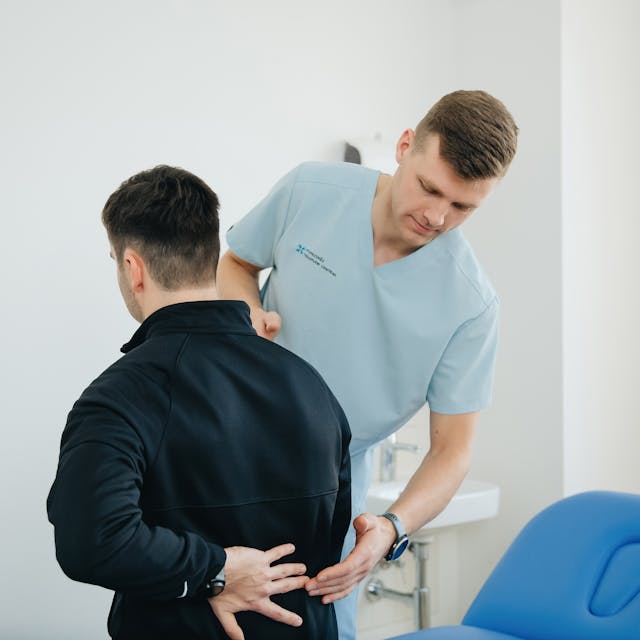
In this article, we’ll explore the full spectrum of conditions that can indicate left-side lower back pain, helping you better understand when to seek medical care.
Common Causes of Left-Sided Lower Back Pain
Common causes of left-sided lower back pain include strains, sprains, spinal conditions, sciatica, sacroiliac joint dysfunction, kidney conditions, and, in women, fibroids and endometriosis.
- Strains and sprains are among the most common causes of back pain, including left-sided lower back pain. Thankfully, they’re also among the most mild – most strains and sprains resolve on their own after a few days or weeks of home care. A strain is a stretched or torn muscle or tendon, while a sprain is a stretched or torn ligament.
- Spinal conditions like herniated disc, spinal stenosis, spondylolisthesis, spinal osteoarthritis, and scoliosis often cause lower back pain. You might feel this pain in just one side of the back, depending on the location of the damaged tissue and irritated nerves.
- Sciatica develops when the sciatic nerve (which travels from the lumbar spine through the buttocks and down the legs) is irritated, often from a herniated disc, spinal stenosis, or spondylolisthesis. Since sciatica typically impacts just one side of the body, left-sided lower back pain is a very possible symptom.
- Sacroiliac joint dysfunction occurs when the joint in question doesn’t move normally—it may either be hypermobile or hypomobile (lacking mobility). Since the SI joint is located where the bottom of the spine joins the pelvis, it often causes lower back and lower extremity pain.
- Kidney conditions like kidney stones and kidney infections can cause left-side lower back pain. The kidneys are positioned on either side of the spine, under the rib cage, behind the back muscles. Kidney pain typically starts in the lower back and side and may radiate to the lower abdomen and groin. Kidney stone pain often comes in waves, while kidney infection pain may come with a fever and burning while urinating.
- In any case, if you suspect your lower back pain is stemming from the kidneys, seek immediate medical care.
- Fibroids and endometriosis can cause left lower back pain in females.
- Fibroids are small tumors that develop in the uterus, and they’re almost always benign. If they form on the back of the uterus, they can press on nerves in your lower back.
- Endometriosis occurs when cells similar to those in the uterine tissue form outside the uterus. Hallmark endometriosis symptoms include pelvic pain, irregular periods, and painful intercourse, but lower back pain is also very prevalent, especially if the abnormal tissue forms in or around the back.
Diagnostic Approaches and When to See a Doctor
It’s time to see a doctor for left-side lower back pain if it’s severe, lasts longer than a few weeks, occurs with other concerning symptoms, or develops after a significant accident.
- Lower back pain that lasts longer than a few weeks of rest and home care (like heat/cold therapy) probably needs professional medical care. You may be dealing with an underlying condition, like a herniated disc or spinal stenosis, that can worsen without more intensive treatment. The sooner you see a doctor for persistent lower back pain, the more effectively you can prevent chronic back pain (and surgery).
- Lower back pain that occurs with other worrying symptoms always warrants a visit to your doctor. These symptoms include:
- Fever and chills
- Nausea and vomiting
- Unexplained weight loss
- Numbness, tingling, or weakness in the extremities
- Lost bowel or bladder control
- If you experience lower back pain after an accident or trauma, like a car accident, it’s best to see your doctor immediately. During accidents, your body’s fight-or-flight response (and the adrenaline that comes along with it) can mask pain and injuries. This pain can crop up later on and can turn into a chronic issue if it’s not promptly addressed.
Diagnostic Approaches for Left-Side Lower Back Pain
Diagnostic approaches for left-side lower back pain include a medical history, physical exam, blood testing, urine testing, and imaging (x-rays, CT scans, MRIs, ultrasounds).
- Your doctor will ask for a complete medical and family history to help diagnose your lower-left back pain. This usually involves a thorough questionnaire with questions about past medical conditions, surgeries, and medications.
- Next up, your doctor will perform a physical exam to identify abnormalities in your spine’s structure, curvature, or range of motion. Your doctor may also ask whether you experience pain in different positions to help pinpoint exactly where your symptoms are stemming from.
- Blood testing can help your doctor identify or rule out various conditions that cause lower back pain by identifying markers of inflammation, infection, and cancer. Your doctor may order specific blood tests to rule out conditions based on your exam and symptoms.
- Your doctor may also order urine testing if they suspect a kidney issue. Urine tests are common diagnostic tools for kidney stones and infections.
- Imaging can help confirm a diagnosis for various issues, from nerve impingement to herniated disc to spinal stenosis and more. Common imaging tests used to diagnose lower back pain include:
- X-rays use electromagnetic radiation to create images of the body’s tissues and structures – particularly the bones. They’re effective at identifying vertebral fractures and bone deformities.
- CT scans use X-rays and computer technology to generate detailed images of bone, muscle, organ, blood vessel, and fat tissue. They’re more detailed than traditional X-rays, making them helpful for identifying bone and cartilage irregularities.
- MRI scans use magnetic and radio wave technology to form high-resolution images of the body’s organs and tissues. Unlike X-rays and CT scans, MRIs create detailed three-dimensional images of soft tissue, making it the preferred choice to diagnose nerve, disc, and ligament conditions.
Treatment Options from Conservative to Surgical
Treatments for left-side lower back pain range from conservative to surgical. For most conditions, your doctor will begin with conservative therapies and transition to surgery only if your symptoms don’t improve after several months.
Conservative treatment options for left-side lower back pain include:
- Physical therapy
- Medications
- Heat and cold therapy
- Lifestyle modifications and self-care
- Alternative remedies, like acupuncture and massage therapy
Surgical treatment options for left-side lower back pain depend on the underlying cause. But for spinal conditions like spinal stenosis, herniated disc, and spondylolisthesis, the most common option is spinal decompression (often with laminectomy) and fusion for stability. People who want to avoid the risks and limited mobility associated with fusion can consider non-fusion innovations, like the TOPS System.
The TOPS System: A Revolutionary Approach to Spinal Stability

The TOPS System has revolutionized spinal stability for lumbar spondylolisthesis and spinal stenosis. This spinal fusion alternative is a dynamic spinal implant that replaces the tissues removed during fusion. It stabilizes the spine while retaining its ability to move in all directions, providing a groundbreaking combination of pain relief and mobility.
David danced at his son's wedding Bonnie explains why TOPS surgery was the right decision for her Wade is back to hiking Scott speaks about going to surgeryRegain your mobility with Premia Spine!



Regain your mobility with Premia Spine! Contact us now
TOPS became FDA-approved in 2023 and was granted a superior-to-fusion claim from the FDA, underlining its remarkable benefits as a surgical innovation for lumbar spondylolisthesis and spinal stenosis.
Prevention and Long-Term Management Strategies
Prevention and long-term management strategies for left-side lower back pain include staying active with low-impact exercise, eating an anti-inflammatory diet, staying hydrated, maintaining good posture, managing stress levels, and prioritizing high-quality sleep. These strategies, along with support from your physician, can help you keep lower back pain in check.