



Lower Back Pain and Nausea: What’s the Connection and How to Find Relief
- Most common causes: Back pain that irritates the vagus nerve; referred pain from the spine; GI issues; organ conditions (kidney, liver, gallbladder)
- Prevalence: Up to 80% of people experience lower back pain at some point in life, according to The Dartmouth Institute for Health Policy and Clinical Practice.
- Red flag symptoms: Seek emergency care if you experience any of these symptoms with back pain and nausea:
- Sudden, severe back or abdominal pain
- High fever
- Chest, arm, or jaw pain
- Blood in vomit, urine, or stool
- Loss of bladder or bowel function
- New leg numbness or weakness
- Confusion, fainting, or dizziness
- Severe, one-sided pelvic pain and vaginal bleeding during pregnancy
Nausea is never a welcome sensation. But when it occurs along with other symptoms, like lower back pain, you may worry that a deeper issue is at play.
To clear up any concerns and ensure you get the proper care, let’s explore the connection between lower back pain and nausea, including strategies to find relief.
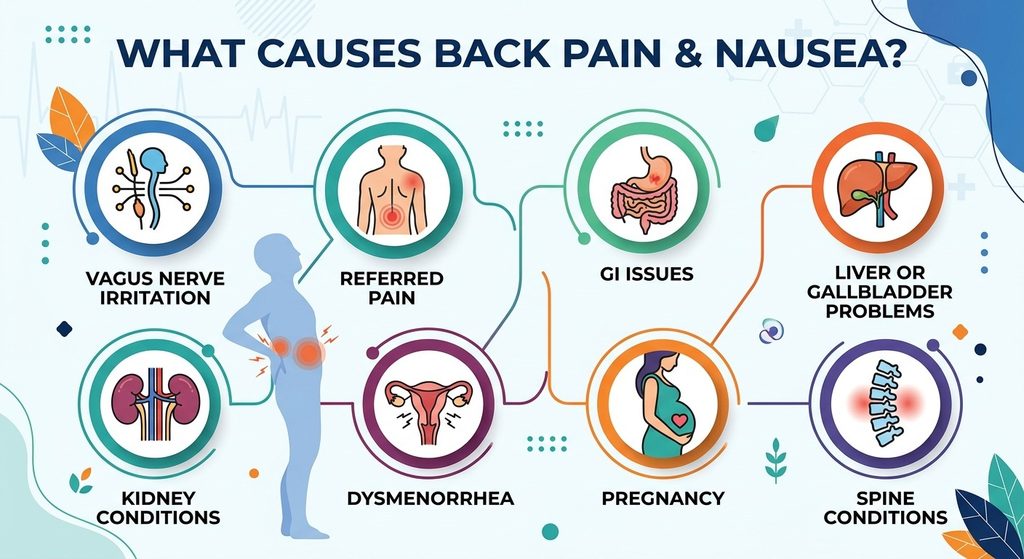
Understanding the Connection Between Back Pain and Nausea
The connection between back pain and nausea can vary depending on the root cause. However, multiple physiological factors link the two symptoms, mainly the nervous system.
How the Nervous System Connects Back Pain and Nausea
One of the most significant threads linking nausea to back pain is the nervous system, as certain nerves can trigger both symptoms. Perhaps the biggest example of this is the vagus nerve, which extends from the brain to various abdominal organs. It’s a heavy hitter in the parasympathetic nervous system, helping to regulate bodily functions ranging from breathing and heart rate to digestion and mood.
In some cases, back pain can irritate the vagus nerve. This can cause nausea and stomach discomfort, along with back discomfort.
Referred Pain
Another possible reason for back pain and nausea is referred pain. Referred pain is defined as pain that’s felt in one part of the body but originates in another. Sometimes, pain stemming from the spine or back muscles impacts the stomach and causes nausea.
Common Causes and Conditions
Gastrointestinal Issues
Certain gastrointestinal issues, including bowel inflammation, food poisoning, norovirus, and peptic ulcers, can cause both back pain and nausea. With these conditions, back pain and nausea are two separate symptoms that can occur simultaneously, along with other symptoms like abdominal pain and vomiting.
Liver and Gallbladder Problems
The liver and gallbladder are both organs that can trigger back pain and nausea when problems occur, such as:
- Gallstones
- Biliary dyskinesia
- Gallbladder inflammation, known as cholecystitis
- Liver cirrhosis
- Liver abscess
These issues typically cause abdominal pain that may radiate to the back or shoulder, along with other symptoms like fatigue, digestive issues, and jaundice. If you experience symptoms of a liver or gallbladder issue, contact your doctor right away for guidance.
Kidney Conditions
The kidneys filter waste and excess water from the bloodstream. Back pain and nausea are possible symptoms of the following kidney conditions:
- Kidney infections, also known as pyelonephritis
- Kidney stones
- Polycystic kidney disease, or PKD
- Hydronephrosis, caused by urine building up in the kidneys
Kidney-related pain is usually felt in the upper back or flank area, right under the rib cage. It also tends to feel “deep” or dull and doesn’t respond to movement (like stretching or changing position). If you think your pain is stemming from the kidneys, contact your doctor right away for next steps.
Reproductive Health and Hormonal Causes
Lower back pain and nausea are both common symptoms of dysmenorrhea (the medical term for painful periods) and endometriosis. Here’s an overview of these possible causes:
- Dysmenorrhea, or painful periods, impacts over 84% of women, according to a Journal of Pain Researchstudy.
- Causes: Elevated prostaglandin levels due to menstruation
- Symptoms: Painful menstrual cramps, lower back pain, nausea, headaches, dizziness
- Endometriosis occurs when endometrium-like tissue grows outside of the uterus. It impacts an estimated 10% of women globally, according to the World Health Organization.
- Causes: Unknown; potentially a combination of genetic, hormonal, and immunological factors
- Symptoms: Severe menstrual cramps, back pain, abdominal pain, heavy menstrual bleeding, spotting, painful intercourse, GI discomfort (bloating, constipation, diarrhea)
Pregnancy-Related Causes
Back pain and nausea are very common symptoms of pregnancy. Lower back pain, in particular, is prevalent in pregnancy as the fetus grows and imparts more pressure on the spine. Nausea and vomiting are telltale symptoms of morning sickness, which usually occurs in the first trimester of pregnancy as a result of hormonal fluctuations.
Other possible pregnancy-related causes of back pain and nausea are ectopic pregnancy and cholestasis of pregnancy.
Ectopic Pregnancy
Back pain and nausea are possible symptoms of ectopic pregnancy, a medical emergency that occurs when a fertilized egg implants outside of the uterus (usually in the fallopian tube).
The most common signs of ectopic pregnancy are vaginal bleeding and lower abdominal and/or pelvic pain. Some women experience early pregnancy symptoms, including nausea, breast tenderness, and a missed menstrual cycle. Additionally, leaking blood from the fallopian tube can trigger shoulder pain or the urgent need to have a bowel movement.
If you experience these symptoms, seek immediate medical care. Ectopic pregnancy is a medical emergency that can cause severe complications if left untreated. Note that an ectopic pregnancy typically produces a positive pregnancy test.
Cholestasis of Pregnancy
Cholestasis of pregnancy, also known as intrahepatic cholestasis of pregnancy (ICP), affects liver function. With this condition, bile accumulates in the body, causing severe itching (that often starts on the hands and feet) without a rash. While this is the most common symptom of ICP, other possible signs include:
- Nausea
- Pain in the upper right quadrant that may radiate to the back
- Dark urine
- Pale or greasy stools
- Fatigue
- Reduced appetite
- Jaundice (yellowing skin and eyes)
If you’re pregnant and experience severe, unexplained itching, contact your doctor right away. They may need to conduct blood testing to check your liver function.
Spine and Muscle-Related Causes
Spinal issues, like nerve impingement, herniated disc, spinal stenosis, and spinal misalignments, usually cause back pain. While it’s not a common symptom, nausea can also occur if the issue compresses a nerve that supplies the gastrointestinal system. This is also true for inflamed or tense muscles that press on nearby nerves.
Could It Be a Heart Attack or Aortic Emergency?

Less commonly, lower back pain and nausea can point to a heart attack or aortic dissection. These are life-threatening medical emergencies; call 911 or go to the nearest ER if you experience warning signs of these conditions.
- A heart attack happens when blood flow to the heart is significantly reduced or blocked. Symptoms can include:
- Chest pressure, pain, or squeezing
- Pain radiating to the arm(s), back, jaw, neck, and/or stomach
- Shortness of breath
- Nausea
- Cold sweats
- Rapid or irregular heartbeat
- Lightheadedness
- Fatigue
- Aortic dissection is a tear in the inner layer of the aorta. Symptoms can include:
- Sudden, severe chest or upper back pain (potentially a ripping or stabbing sensation)
- Severe abdominal pain
- Shortness of breath
- Dizziness and fainting
- Nausea and vomiting
- Weak, rapid pulse
- Confusion
- Heavy sweating
Cancer-Related Causes: Spinal Metastasis and Multiple Myeloma
While rare, certain cancers can cause lower back pain and nausea. Possibilities include multiple myeloma, a form of blood cancer, and spinal metastasis, which occurs when cancer cells spread to the spine.
Cancer-related lower back pain and nausea present differently than musculoskeletal pain; cancer-related pain is often:
- Unresponsive to rest and conservative treatments, like physical therapy
- Worse at night
- Constant and progressive (musculoskeletal pain tends to fluctuate based on activity and position)
Additionally, cancer-related back pain and nausea may occur with other concerning symptoms, including:
- Unexplained weight loss
- Progressive neurological issues, like weakness, numbness, and changes in bowel or bladder control
If you experience these symptoms or experience constant, progressive lower back pain and have a history of cancer, contact your doctor for further guidance.
How to Tell the Difference: Pain Patterns by Condition
You’ll need a formal diagnosis from a doctor to truly know the source of your pain. But for an overview of how pain patterns vary by condition, refer to the table below.
| Lower Back Pain Patterns by Condition | |||
| Condition | Location | General Pattern | Key Associated Symptoms |
| Musculoskeletal causes (sprains, strains, spine condition) | Localized to lower back, might radiate to lower extremities | Worsens with specific movements (i.e., bending, twisting), improves with rest/position changes | Back stiffness, muscle spasms |
| Food poisoning | Abdomen, potential cramping in back | Sudden onset, resolves within 24 to 72 hours | Vomiting, fever, diarrhea |
| Gallstones | Central abdomen, upper back (between shoulder blades), right shoulder | Sudden, rapidly worsens, post-fatty meals | Nausea, Vomiting |
| Kidney stone | Flank, lower back, groin | Sudden, occurs in intense waves lasting minutes or hours | Blood in urine, nausea, vomiting |
| Kidney infection (pyelonephritis) | Flank, lower back | Consistent, dull ache | Fever, chills, burning sensation during urination, frequent urination |
| Menstrual cramps | Lower back, pelvis | Occurs just before or during menstrual bleeding | NauseaFatigue |
| Pregnancy pain (normal) | Lower back | May worsen during 2nd and 3rd trimesters; worsens with prolonged sitting/standing | Morning sickness, fatigue, frequent urination, breast tenderness, food cravings |
Diagnosis and Treatment Options
To diagnose the problem causing lower back pain and nausea, your doctor will gather information (including your family and medical history), perform a physical exam, and order any required blood testing or imaging. Based on this diagnosis, they can recommend a treatment plan to address the underlying issue.
Common treatment approaches include:
Home Remedies and Self-Care Options
For mild issues causing lower back pain and nausea (like minor sprains or strains, muscle tension, soreness, etc.), home remedies and self-care may be all you need to recover.
Common strategies for lower back pain include:
- Heat and cold therapy
- Gentle stretching
- Rest
- Improving your posture
- Taking over-the-counter pain medications, like NSAIDs
Common self-care techniques for nausea include:
- Herbal remedies, including ginger, lemon, peppermint, and chamomile
- Hydration
- Aromatherapy, particularly with scents including lavender, ginger, and peppermint
- Rest
- Breathing techniques
- Over-the-counter medications, including dimenhydrinate
Medical Treatments and Interventions
Various treatments may be used for lower back pain and nausea, depending on the underlying cause. Prescription medications, physical therapy, chiropractic care, acupuncture, and massage therapy are all possible options. Ultimately, given that the potential causes of lower back pain and nausea are diverse, ranging greatly from musculoskeletal conditions to organ diseases and more, your doctor will need to provide a personalized treatment plan after a thorough evaluation.
Could Your Back Pain Medication Be Causing Nausea?
If you started experiencing nausea after taking medications for your back pain (such as NSAIDs, muscle relaxants, or prescription opioids), the medications themselves may be to blame. Nausea is a recognized side effect of all of these medications.
Here are a few key signs that back pain medications could be triggering your nausea:
- It starts soon after taking a dose.
- It improves if you eat a small meal before taking the medication.
- It gradually improves over time after starting a new medication.
- It occurs with other common medication side effects, like mild stomachache, lightheadedness, and fatigue
To improve medication-related nausea, try eating a plain snack (like a few crackers) before taking your dose, and slowly sip cool water, ginger tea, or ginger ale. If the nausea persists, contact your doctor to see if a lower dose or different medication may work better for you.
Lifestyle Modifications
Lifestyle modifications often play a critical role in overcoming conditions like lower back pain and nausea. They can help to minimize your need for medications and invasive treatments while providing long-term symptom relief. Key adjustments include:
- Reaching and maintaining a healthy weight
- Eating a healthy diet
- Staying active, ideally with regular low-impact exercise
- Quitting smoking
- Limiting alcohol consumption
Emergency Situations and Warning Signs
In rare circumstances, lower back pain and nausea can indicate an emergency medical situation. If you experience any of the following warning signs and red flag symptoms, seek immediate medical care:
- Fever or chills
- Loss of bladder or bowel function
- Numbness and weakness
- Severe abdominal discomfort
- Dizziness or fainting
- Confusion
- Severe vomiting
- Symptoms following a trauma, like a car accident
- Sudden, severe pain
- Rapidly worsening symptoms
After seeking prompt care for these symptoms, your doctor will provide aftercare instructions and recommend follow-up care. You’ll likely need regular follow-ups with your provider until your condition stabilizes to ensure your prescribed treatment plan is effectively resolving the issue.
Prevention and Long-Term Management
Preventative measures and lifestyle changes can help prevent conditions that cause lower back pain and nausea. Along with all of the lifestyle adjustments listed above, make sure to:
- Properly manage any chronic conditions, like diabetes and high blood pressure
- Limit your exposure to environmental irritants and toxins
- Attend all recommended follow-ups and check-ups with your doctor
- Manage your stress levels and address mental health concerns
- Prioritize high-quality sleep and a consistent sleep schedule
- Avoid taking medications unnecessarily or overusing over-the-counter pain medications

If you experience lower back pain and nausea that’s concerning or lasts longer than a few days, visit your doctor for further guidance. If you’re dealing with a chronic condition, like advanced spinal stenosis, a spine specialist can help you explore modern options for lasting relief, like the TOPS System from Premia Spine.
David danced at his son's wedding Bonnie explains why TOPS surgery was the right decision for her Wade is back to hiking Scott speaks about going to surgeryRegain your mobility with Premia Spine!




Regain your mobility with Premia Spine! Contact us now
FAQs: Lower Back Pain & Nausea
Can stress alone cause back pain and nausea?
Yes, stress can cause both back pain and nausea, although these symptoms are typically mild from stress alone.
Is back pain with nausea a sign of pregnancy?
Back pain and nausea are both possible signs of pregnancy, but alone, they don’t definitively indicate pregnancy. If you experience them with other common pregnancy symptoms, like a missed period, consider taking a pregnancy test.
When should I go to the ER for back pain and nausea?
It’s time to go to the ER for back pain and nausea if you experience red flag symptoms like high fever, sudden leg numbness, saddle anesthesia, changes in bowel or bladder control, chest pain, or severe abdominal pain.
Can a herniated disc cause nausea?
While not a key symptom, nausea can stem from a herniated disc due to vagus nerve irritation, the body’s natural stress response, or pain medication side effects.
What does lower right back pain with nausea usually mean?
Lower right back pain with nausea can stem from various conditions depending on your other symptoms, but these symptoms are common with organ conditions like kidney stones, kidney infections, and GI issues.